
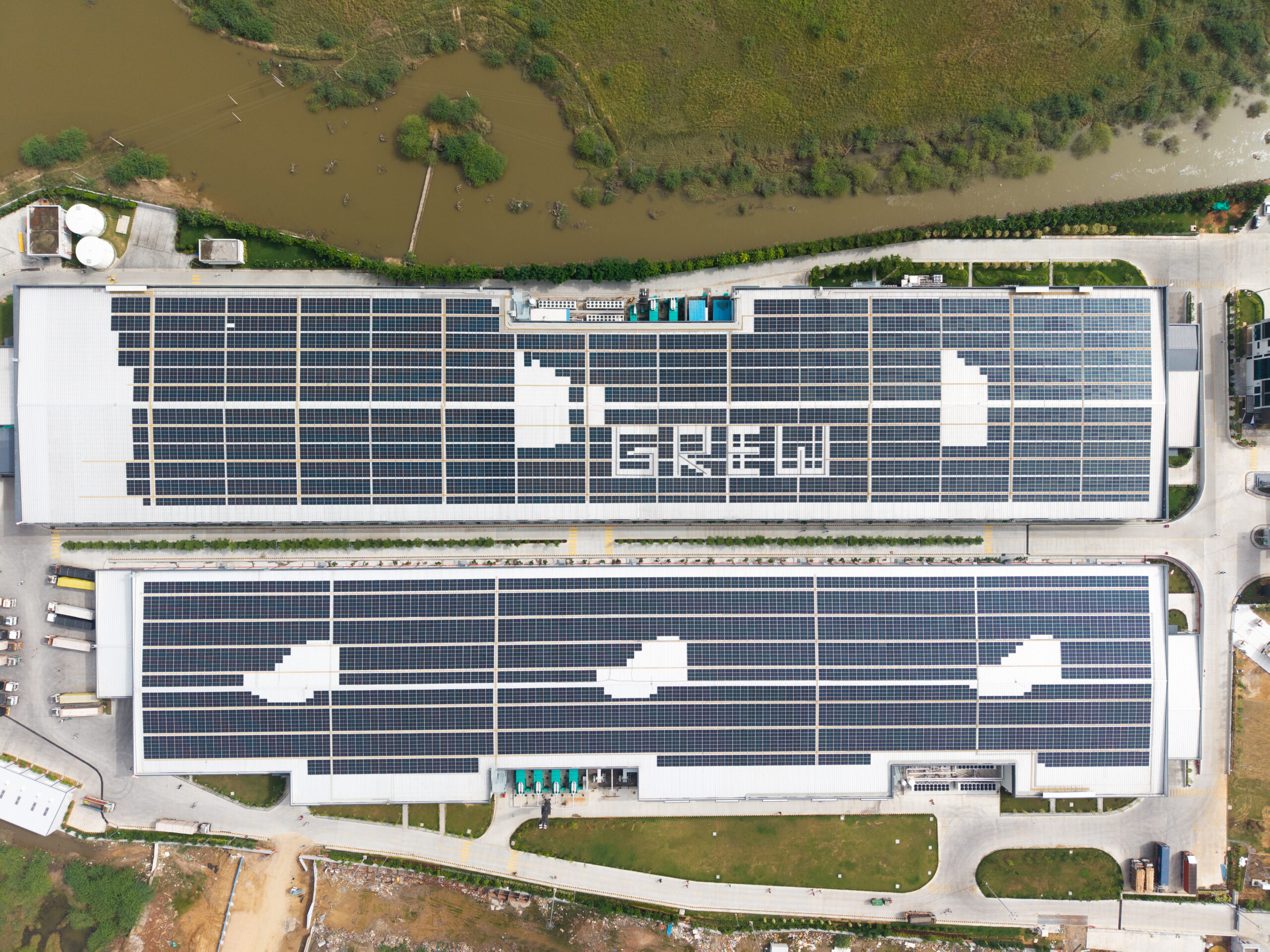
Rajasthan’s solar story has two chapters. The first is for its record-breaking installed capacity, the Bhadla Solar Park, and more sunny days per year than almost anywhere else in India. The second is newer, and growing faster than most people realise.
Alongside its position as India’s largest solar power-producing state, Rajasthan has quietly become one of the country’s more significant solar manufacturing destinations. Several large-scale manufacturers have established production facilities here over the past few years, drawn by the state’s industrial infrastructure, proximity to major project pipelines, and policy environment. Their presence is reshaping what Rajasthan means for India’s solar supply chain as a place where the technology behind it is built.
For project developers and EPC contractors evaluating module suppliers for utility-scale and industrial projects, the field in Rajasthan is wider than it was even two years ago. What follows is a look at five manufacturers with confirmed, operational facilities in the state, along with what developers should be evaluating before making a procurement decision.
Top Solar Panel Manufacturers in Rajasthan for Utility & Industrial Projects
1. GREW Solar
Manufacturing Facility: Dudu, Jaipur District, Rajasthan
GREW Solar was founded in 2022 and has scaled at a pace that few manufacturers manage in their first few years. The company operates a 6.5 GW solar PV module manufacturing plant in Dudu, Jaipur district with an expansion plan to 11 GW in the works. It is backed by the Chiripal Group’s 52-year manufacturing legacy that has shaped the operational discipline behind its production processes.
What distinguishes GREW Solar from many peers is the depth of its integration strategy. Rather than focusing solely on module assembly, the company has established a 3.5 GW solar PV cell manufacturing facility in Narmadapuram, Madhya Pradesh planned to expand to 8 GW as the first step in a deliberate backward integration roadmap.
Cells manufactured in-house feed into modules produced in Rajasthan, giving the company tighter control over quality and supply chain consistency than manufacturers dependent on externally sourced components.
GREW Solar is one of only 11 companies in India to have received a PLI allocation for fully integrated solar manufacturing. Its modules include high-efficiency N-type TOPCon solar PV modules are ALMM certified and designed for the performance demands of utility-scale and large commercial installations.
2. INA Solar (Insolation Energy)
Manufacturing Facility: Three facilities across Jaipur, Rajasthan
INA Solar is one of Rajasthan’s oldest module manufacturers. Established in 2015 with 80 MW of initial capacity, the company now has three manufacturing facilities across Jaipur with a total module manufacturing capacity of 5.5 GW. This scale-up is a reflection of both the growth in domestic solar demand and INA’s steady investment in manufacturing infrastructure.
Its latest facility at Sawarda, on the Delhi-Ajmer Expressway, is spread over 600,000 sq ft and uses AI and robotics-driven manufacturing lines to produce M10R TOPCon modules. The degree of automation at this facility is notably high for the Indian market, with production processes designed to minimise variability across large batch runs.
INA Solar is BSE SME listed and ALMM listed, with its modules supplying government programmes including PM-Kusum and PM Surya Ghar. Expansion plans on the table include 7 GW of module capacity and 4.5 GW of solar cell capacity across Rajasthan and Madhya Pradesh.
3. ReNew Photovoltaics
Manufacturing Facility: Mahindra World City, Jaipur
ReNew Photovoltaics is the manufacturing arm of ReNew Power, one of India’s largest renewable energy companies. The Jaipur facility is spread across 22 acres at Mahindra World City and manufactures around 15,000 modules per day. The ALMM List-I update of March 2026 lists 3.55 GW of enlisted capacity.
The strategic logic for manufacturing in Rajasthan is simple for a company like ReNew Power, with its project pipeline in the state. Manufacturing modules close to where they will be deployed shortens procurement lead times, improves logistics and ensures that product specifications are aligned with the practical needs of the projects they supply. For utility-scale procurement, that alignment matters.
4. SAEL Industries
Manufacturing Facility: Rajasthan
SAEL Industries came to manufacturing through a different route than most. The company is primarily a solar independent power producer, with over 6.7 GW of solar IPP assets across India. Manufacturing entered its strategy as a backward integration move building supply chain capability to reduce procurement dependency for its own growing project pipeline.
The Rajasthan facility runs 3.2 GW of bifacial N-type TOPCon module assembly, with a 300 MW unit in Punjab alongside it. The shift to TOPCon reflects the same direction utility procurement specifications are moving across the sector. SAEL has announced a larger integrated plant in Greater Noida as the next step in its manufacturing build-out, suggesting the Rajasthan operation is part of a longer strategic arc rather than a standalone move.
5. ACME Renewable Equipment Manufacturing
Manufacturing Facility: Jaipur, Rajasthan
ACME Renewable Equipment Manufacturing is a dedicated manufacturing entity within the ACME Group, a Gurgaon-based renewable energy conglomerate. The company operates a 1.2 GW ALMM-listed solar module manufacturing facility in Jaipur, commissioned with an investment of approximately ₹230 crore and currently employing over 700 people.
The scale of intent behind this facility is worth noting. ACME has set a target of ₹10,000 crore in revenue from its manufacturing business by 2030 positioning this as a core vertical within the group’s long-term strategy. Cell manufacturing capacity is in the pipeline as the company moves toward greater upstream integration.
What Developers Should Evaluate Before Choosing a Solar Manufacturer?
For utility-scale and industrial projects expected to operate for more than two decades, the choice of module manufacturer is a decision that will influence project performance long after installation is complete. Before shortlisting, developers should evaluate manufacturers across four areas:
- ALMM Certification: Modules from non-listed manufacturers are ineligible for government-supported projects and open access schemes. Besides the listing itself, the more important questions are about what sits behind it and how much of the supply chain does the manufacturer actually control, and how consistent is output quality across large production batches?
- Supply Chain Integration: Manufacturers who produce their own cells rather than sourcing them externally maintain tighter oversight of the most performance-critical component in the module. For developers procuring at scale, that consistency reduces the risk of underperforming batches showing up in a system that needs to deliver reliable generation for 25 years.
- Technology: The shift toward N-type TOPCon across Rajasthan’s leading manufacturers reflects where utility procurement specifications are moving towards lower degradation, better thermal performance, and stronger long-term output retention. For projects where total lifetime generation is the financial variable that matters most, module technology is not a secondary consideration.
- Warranty and Stability: A 25-year performance warranty is only meaningful if the company issuing it is built to last. Warranty terms, after-sales infrastructure, and the manufacturer’s operational track record all factor into this.

