
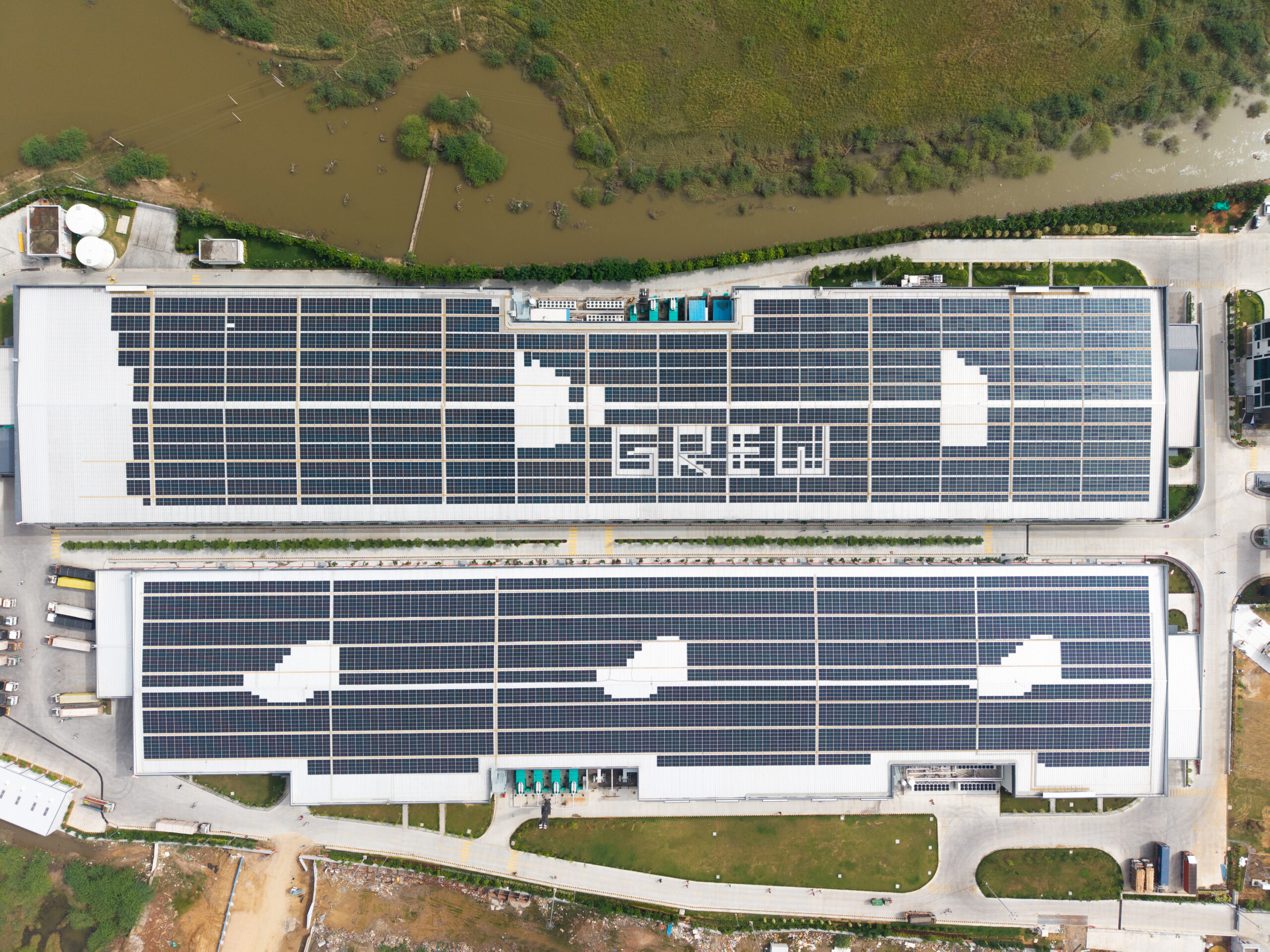
PM Surya Ghar Muft Bijli Yojana remains India’s largest residential rooftop solar programme, and 2026 has been its busiest year yet. According to MNRE data, the scheme had crossed 40 lakh solarised households by May 2026, against a target of one crore homes by FY2026-27 and a central outlay of Rs 75,021 crore. The scheme has moved well past its early rollout phase into a mature, high-volume programme with tighter compliance rules, and it has picked up new guidelines this year that change what installers, businesses, and homeowners each need to check before signing up.
What the Scheme Actually Offers Homeowners
The subsidy is a capital payment tiered by system size, and it does not scale indefinitely with capacity: MNRE’s published slabs run Rs 30,000 for a 1 kW system, Rs 60,000 for 2 kW, and a Rs 78,000 cap for anything 3 kW or larger. To qualify, the applicant needs a residential electricity connection with a sanctioned load of 10 kW or below, and the installed equipment must be ALMM-listed. One detail that catches many homeowners off guard: the subsidy is not an upfront discount. It is credited as a direct bank transfer within roughly 30 days of the DISCOM commissioning the system, which means the full cost has to be funded first, out of pocket or through a solar loan. End to end, from application on the national portal to subsidy credit, MNRE’s own process timeline runs 45 to 90 days, covering feasibility approval, installation by a registered vendor, net meter installation, and final inspection.
What Changed in 2026 That Homeowners Should Know
Two MNRE updates this year are worth knowing before finalising a vendor. From June 1, 2026, eligible modules must appear on ALMM List I and be manufactured using solar cells from ALMM List II, meaning the cells themselves, not just final module assembly, have to be domestically produced. A narrow set of net-metering and open-access projects has since received exemption windows, but subsidised PM Surya Ghar installations are not among them, so this applies directly to homeowners claiming the central subsidy. Separately, MNRE issued an Office Memorandum on July 30, 2026 introducing standard branding guidelines for rooftop solar installations, requiring registered vendors, manufacturers, and DISCOMs to follow uniform identification and visibility standards across both the CAPEX model and the newer Utility Led Aggregation mode. Practically, this gives homeowners a way to visually confirm they are dealing with a registered installation rather than an unregistered contractor claiming scheme eligibility.
Where Businesses Fit In, and Where They Don’t
Commercial and industrial consumers are not eligible for the PM Surya Ghar subsidy. The scheme is built around residential connections with a sanctioned load capped at 10 kW, and the subsidy only applies to the CAPEX model where the homeowner owns the system outright. RESCO and PPA arrangements, where a third party owns and finances the installation, do not qualify even when installed at a residential address. For genuine commercial and industrial rooftops, offices, retail spaces, warehouses, factories, the subsidy route simply does not apply. That doesn’t mean solar is unviable for businesses; the commercial economics run through a different set of levers entirely: net or gross metering policies that vary by state and DISCOM, accelerated depreciation benefits under the Income Tax Act, open access solar for larger loads, and RESCO or PPA structures for businesses that want zero-capex adoption at a fixed per-unit tariff. None of these run through the PM Surya Ghar national portal, and the numbers differ meaningfully by state, so any business evaluating rooftop solar needs a state-specific proposal rather than the residential scheme’s figures. One edge case is worth flagging: home-based businesses or mixed-use properties may still qualify for the residential subsidy if the electricity connection itself is registered as residential and stays within the 10 kW load. It is the connection category that decides eligibility, not how the space is used.
The Compliance Burden Now Sits With the Installer
Vendor registration on the national portal is free and requires a GST certificate, business registration documents, an electrical contractor licence, bank account details, and at least one commissioned solar project as a reference. Two 2026 compliance points now sit on top of that base requirement. Branding compliance under the July memorandum applies across both CAPEX and ULA project modes, so installers working through aggregators are not exempt. And ALMM List I plus List II compliance needs checking at the sourcing stage, before committing to a project timeline or price. A module that was compliant last quarter isn’t guaranteed to still be on the list, and committing to non-compliant stock risks the customer’s subsidy eligibility, not just the installer’s margin. There is also a practical reason to tighten documentation discipline: since the subsidy is disbursed within about 30 days of commissioning, any delay in net-metering paperwork or inspection sign-off delays the homeowner’s payout directly, and in a scheme where vendor reputation travels by word of mouth, that turnaround time has become a genuine differentiator.
The Rule Rewards a Different Kind of Manufacturer
The List-II requirement changes what domestic manufacturing means for a module supplier’s compliance risk. A manufacturer that only assembles panels domestically while importing cells is now exposed every time the approved list is revised, since a change in cell sourcing can strand inventory or de-list a product overnight. One that produces its own cells carries none of that exposure, because the compliance boundary sits entirely within its own supply chain.
GREW Solar is built on that backward-integrated model: cell manufacturing in Narmadapuram feeding directly into module production in Dudu, rather than sourcing cells externally. GREW is one of 11 companies to win a PLI allocation covering PV modules, cells, and wafers/ingot manufacturing, under the same backward-integration approach this year’s rule is now asking the rest of the industry to move toward.
That shift, more than the subsidy slabs or the branding stickers, is the part of 2026’s changes likely to decide which manufacturers stay compliant without scrambling every time MNRE revises a list.

