
A bank financing a large solar project is not underwriting a module. It is underwriting twenty-five years of cash flow that a module is expected to produce, and every question a credit committee asks about “bankability” traces back to that single concern. Procurement teams and lenders are looking at the same modules, the same datasheets, the same warranty documents, but they are asking different questions of them. A procurement team asks whether a module performs well. A lender asks whether the project built around it can service its debt.
Revenue Risk Starts With Generation Risk
Project finance for a solar plant is structured around a metric called the debt service coverage ratio, the ratio of cash available for debt service to the actual principal and interest owed in a given period. Lenders typically require a minimum DSCR in the 1.20x to 1.30x range before extending debt, meaning the project needs to generate meaningfully more cash than the bare minimum required to service its loan. That cash flow depends directly on how much electricity the plant actually generates, which depends directly on how the installed modules perform over time, including under the specific conditions of the site itself. A module’s temperature coefficient and expected derating in a hot, dusty region can differ meaningfully from its performance in a cooler climate, and that site-specific gap is exactly what a conservative generation estimate is built to absorb. This is why lenders in project finance structure debt sizing around conservative production estimates, often the P90 case, the generation level a project has a 90% probability of exceeding, rather than the more optimistic P50 median case a developer might prefer to model against. A module’s degradation curve, temperature response, and consistency across thousands of units are not abstract technical details from this vantage point. They are direct inputs into whether a project clears its DSCR covenant or breaches it.
The Independent Engineer Verifies What the Manufacturer Claims
A credit assessment cannot observe twenty-five years of future performance, so it substitutes something it can verify. In practice, that verification runs through a specific role in project finance: a Lender’s Independent Engineer, or Lender’s Technical Advisor, appointed to conduct technical due diligence on the lender’s behalf, separate from and independent of the developer’s own team. This is where certification and testing documentation actually gets used, not as marketing material on a datasheet, but as evidence an independent engineer reviews directly. A manufacturer’s electroluminescence testing coverage, mechanical load and hail-resistance certification, and the traceability connecting a finished module back to its production batch and test records are exactly what this kind of review is built to check, since an independent engineer’s job is to confirm the manufacturer’s claims hold up rather than take them on faith. A developer sourcing from an established solar module manufacturer in India gives that review something concrete to work with, production history, prior large-scale supply, documented quality systems, rather than asking the lender’s own technical advisor to underwrite projected performance with no verifiable record behind it. Per IEEFA’s analysis of Indian rooftop solar financing, banks were historically reluctant to extend debt to solar projects precisely because the technology and the manufacturers behind it lacked an established track record, and lending has concentrated around developers with what IEEFA describes directly as “bankable track records” as the sector has matured.
Construction Delay Is Drawdown Risk, Not Just a Scheduling Problem
Debt in a project finance structure is typically released in tranches tied to construction milestones, not disbursed as a single upfront sum, which means a module delivery delay does more than push back a commissioning date. It can stall a drawdown, or leave a project drawing debt against a construction schedule it can no longer meet, well before the plant has generated a single unit of revenue to offset that exposure. Manufacturing scale, inventory planning, and logistics capability feed directly into completion risk from a lender’s perspective, the same category of risk construction-phase financing is structured to guard against. A module can carry excellent technical specifications and still represent real financing risk if the manufacturer behind it cannot reliably deliver the required volume inside the window the debt facility was structured around.
Warranty as a Credit Instrument, Not Just a Guarantee
A 25- or 30-year warranty reads as reassurance on a datasheet, but to a lender it functions as a credit instrument, a promise whose value depends entirely on whether the party making it will still be solvent and operational when a claim needs honoring. Product warranty and performance warranty are not interchangeable in this context any more than they are in procurement: the first covers physical manufacturing defects, the second covers whether the module sustains its rated output over time, and a lender’s risk model treats a shortfall against the performance warranty as a direct hit to the generation forecast feeding the DSCR calculation. A warranty document that reads well but sits behind a manufacturer with thin financial standing is, from a credit perspective, closer to an unsecured promise than a real risk mitigant.
Degradation as a Line Item in the Financial Model
Degradation does not sit in a technical appendix in a project finance model, it feeds directly into the generation forecast behind CFADS, in every year of the loan tenure. A module degrading half a percentage point faster than modeled compounds across a large installation and a multi-decade loan term into a real, quantifiable gap between projected and actual cash flow, the exact gap a DSCR covenant is designed to catch. Lenders build downside cases specifically to stress-test how much degradation, curtailment, and availability risk a project can absorb before it breaches its minimum required coverage ratio, and a module’s specified degradation rate is one of the few technical figures that flows directly into that stress test rather than sitting alongside it as context.
Where This Leaves the Manufacturer’s Own Documentation
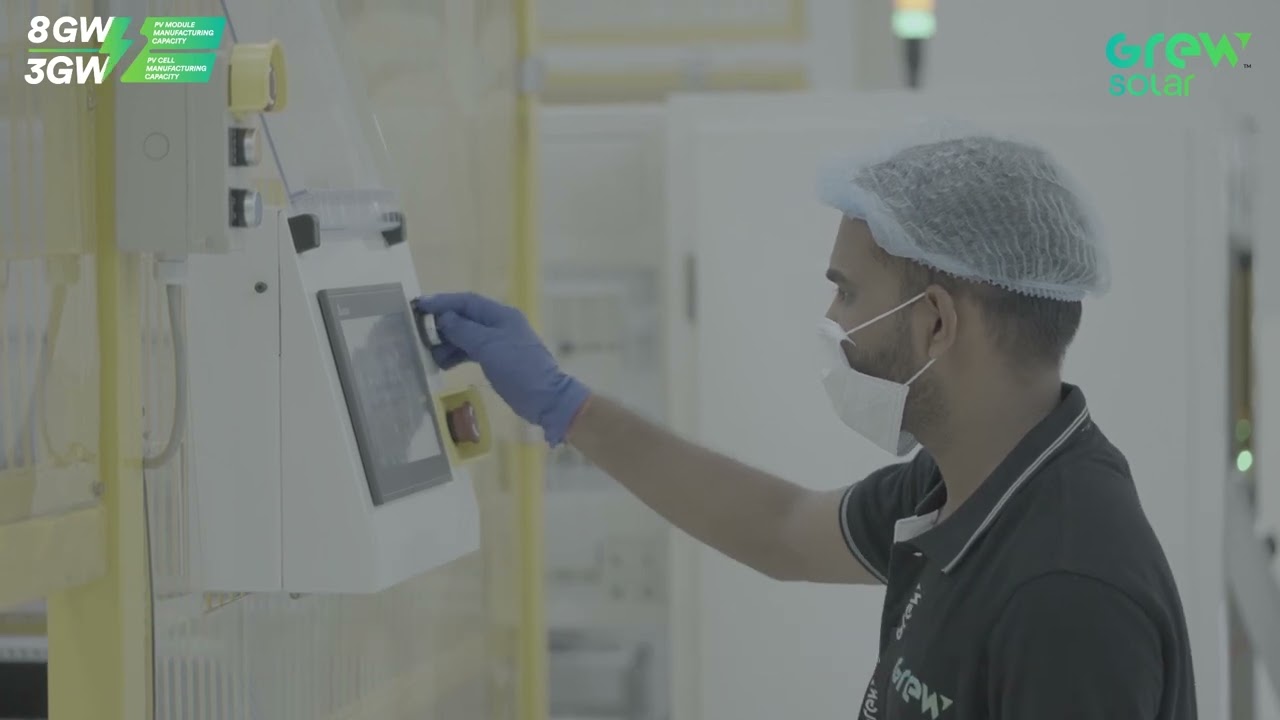
None of this changes what a manufacturer needs to demonstrate, it changes who is reading the documentation and why. GREW Solar’s manufacturing facility runs testing that maps directly onto the risk questions above rather than existing as a separate credential: 100% string-level electroluminescence testing with triple-stage inspection addresses the production-consistency question an independent engineer’s review is built around, and certification to IEC 61215, which itself requires mechanical load and hail-impact testing, gives that review something to verify beyond the manufacturer’s own claims. A solar project financing decision that rests partly on module risk is, in practice, resting on whether that kind of documentation exists and holds up under independent scrutiny, not on the module’s peak wattage figure.
Bankability, from a lender’s chair, was never really a statement about the module. It has always been a statement about whether the cash flow behind the loan is real, and the module is simply where that question happens to start.

