
India’s solar module manufacturing capacity has expanded sharply over the past two years, driven by a policy push that began with the Production-Linked Incentive scheme and has since tightened through successive rounds of the Approved List of Models and Manufacturers framework. According to Mercom India’s 2026 industry report, the country added approximately 119 GW of new module manufacturing capacity through 2025, bringing cumulative capacity to roughly 210 GW by December 2025. Cell manufacturing capacity has not kept pace, and the resulting gap is now shaping procurement and compliance decisions across the sector.
The Capacity Numbers Behind the Headlines
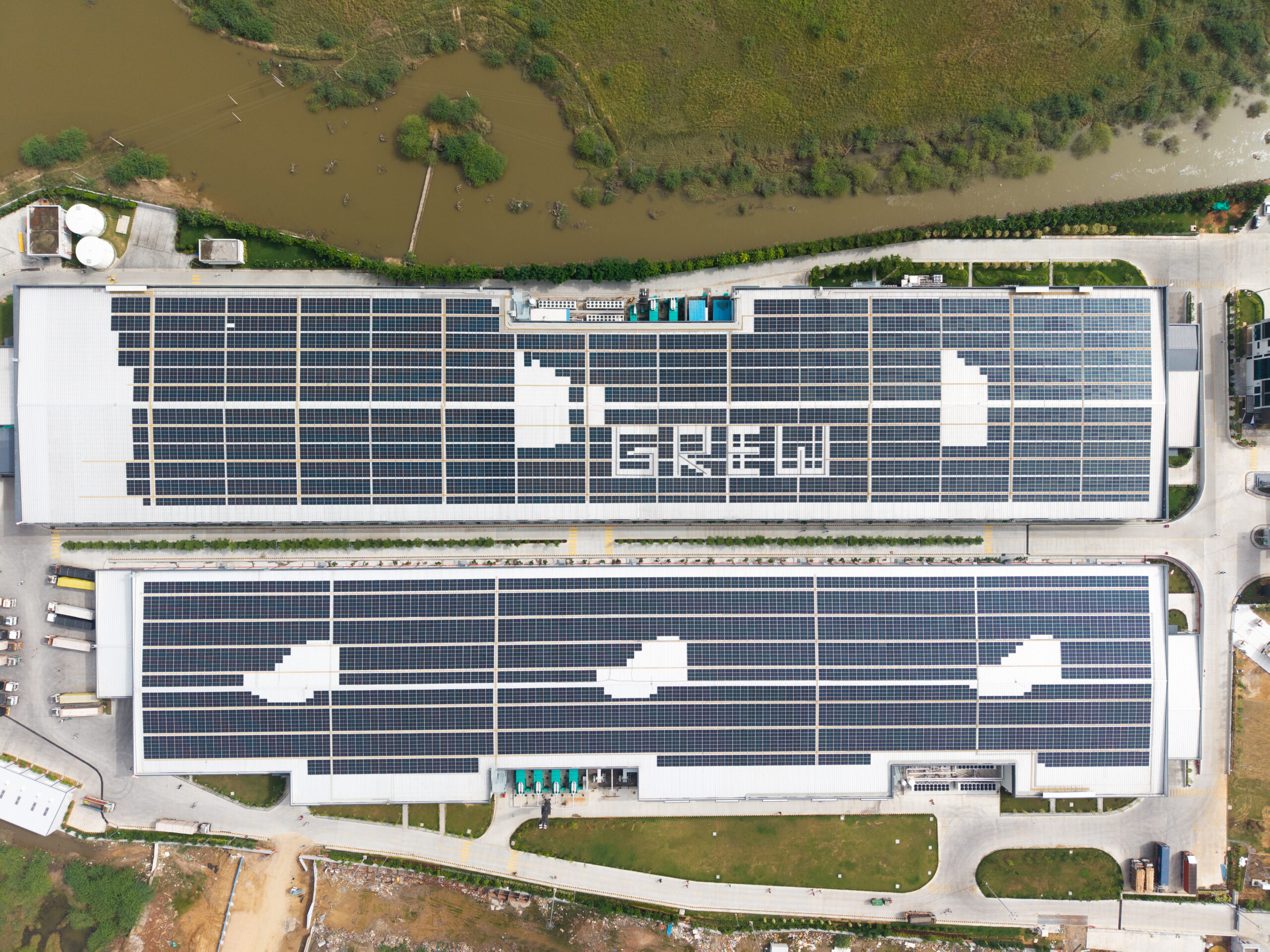
MNRE has structured its PLI scheme solar manufacturing support with a ₹24,000 crore outlay covering more than 48 GW of fully or partially integrated manufacturing capacity, allocated across three categories: polysilicon-to-module, ingot-wafer-to-module, and cells-plus-modules. A manufacturer awarded under the poly-to-module category carries no obligation to build cell capacity, while one awarded under cells-plus-modules does, and the scheme’s early years saw considerably more capacity allocated to the former. That imbalance is part of why domestic solar manufacturing India has scaled unevenly across the value chain rather than growing in step from raw material to finished module. Manufacturers including Waaree, Vikram Solar, Premier Energies, and GREW Solar, whose Dudu facility in Rajasthan operates at 6.5 GW with an announced expansion to 11 GW, have each contributed to the module-side capacity that now defines India’s manufacturing base. That module figure is accurate and verifiable. It does not indicate what those modules are built from.
The Backward Integration Shift
Cell manufacturing is where the supply chain gap is most significant. Per CEEW, ALMM List-I enlisted module manufacturing capacity reached 119.8 GW as of October 2025, while cumulative cell manufacturing capacity, including capacity still coming online under PLI support, is estimated at 60.34 GW, a shortfall of approximately 59.66 GW. That gap is why the ALMM List-II mandate, requiring List-I modules to use List-II certified cells from June 1, 2026, functions as an operational constraint rather than a compliance formality. Backward integration, manufacturing cells rather than sourcing them externally, has accordingly moved from a competitive differentiator to a structural requirement for manufacturers operating at scale. SAEL Industries built cell manufacturing into its strategy specifically to reduce procurement dependency for its own project pipeline. INA Solar has announced plans to add 4.5 GW of cell capacity alongside its existing module lines. GREW Solar took this route earlier than most, operating a cell manufacturing facility in Narmadapuram, Madhya Pradesh, that feeds directly into its Dudu module line, and its inclusion among 11 companies to receive PLI allocation covering modules, cells, and wafers reflects the same three-category structure MNRE built the scheme around.
Why the Gap Exists in the First Place
Module and cell manufacturing are not comparable undertakings, and that difference explains much of the imbalance. Assembling modules involves stringing, laminating, and framing cells that have already been manufactured elsewhere, a process that can be set up and commissioned in a relatively short timeframe. Manufacturing cells requires diffusion furnaces, PECVD deposition equipment, and precision screen printing lines, each carrying significantly higher capital cost, longer equipment lead times, and process expertise most module-only manufacturers had no prior need to develop. Commissioning a new cell line typically takes considerably longer than commissioning a module line of comparable capacity. Lower barrier to entry, more than incentive value alone, is why the PLI scheme’s earlier allocations skewed toward module manufacturing even where cell manufacturing carried the stronger incentive weighting.
Where the Constraint Actually Bites
CEEW’s analysis notes that without additional cell capacity beyond current projections, nearly half of India’s enlisted module manufacturing capacity could become ineligible for domestic deployment starting June 2026, outside specific exempted categories such as net-metering and open-access projects commissioned before that date. A developer working entirely within an exempted category faces a materially different sourcing environment than one procuring for a subsidised residential or utility-scale project under the mandate directly. A PLI allocation on paper is not equivalent to operational cell output today, and that distance is creating near-term sourcing pressure for module manufacturers that have not yet moved on cell integration. Module manufacturing capacity has expanded as reported; the upstream capacity it depends on has not expanded at the same rate, and the two figures should not be read as a single trend.
The Procurement Question This Creates
For EPCs and developers, the gap is not only a manufacturing-sector statistic, it changes what due diligence needs to check. A manufacturer’s overall scale or ALMM List-I status no longer guarantees consistent access to List-II compliant cells, since that access now depends on whether the manufacturer holds its own cell supply or is competing for the same constrained external pool as everyone else. Cell sourcing traceability has become a standard verification step rather than an unusual request as a direct result, and manufacturers with in-house cell capacity carry a structurally different supply reliability profile than those without it, independent of how large their module operation is. For a developer evaluating vendors against a fixed project timeline, that distinction now carries more practical weight than it did before the List-II mandate took effect.
Where This Goes Next
GREW Solar, founded in 2022 and built on the Chiripal Group’s manufacturing base, structured its cell manufacturing as an early step in its integration roadmap rather than a later addition, ahead of the compliance deadline that has since tightened sourcing across the sector. Manufacturers who made that same sequencing choice early are now working from a materially different starting position than those approaching cell integration as a response to the mandate rather than preparation for it. The next phase of India’s manufacturing build-out will be shaped by how quickly the remaining gap closes, not by how large module capacity announcements continue to get.

