
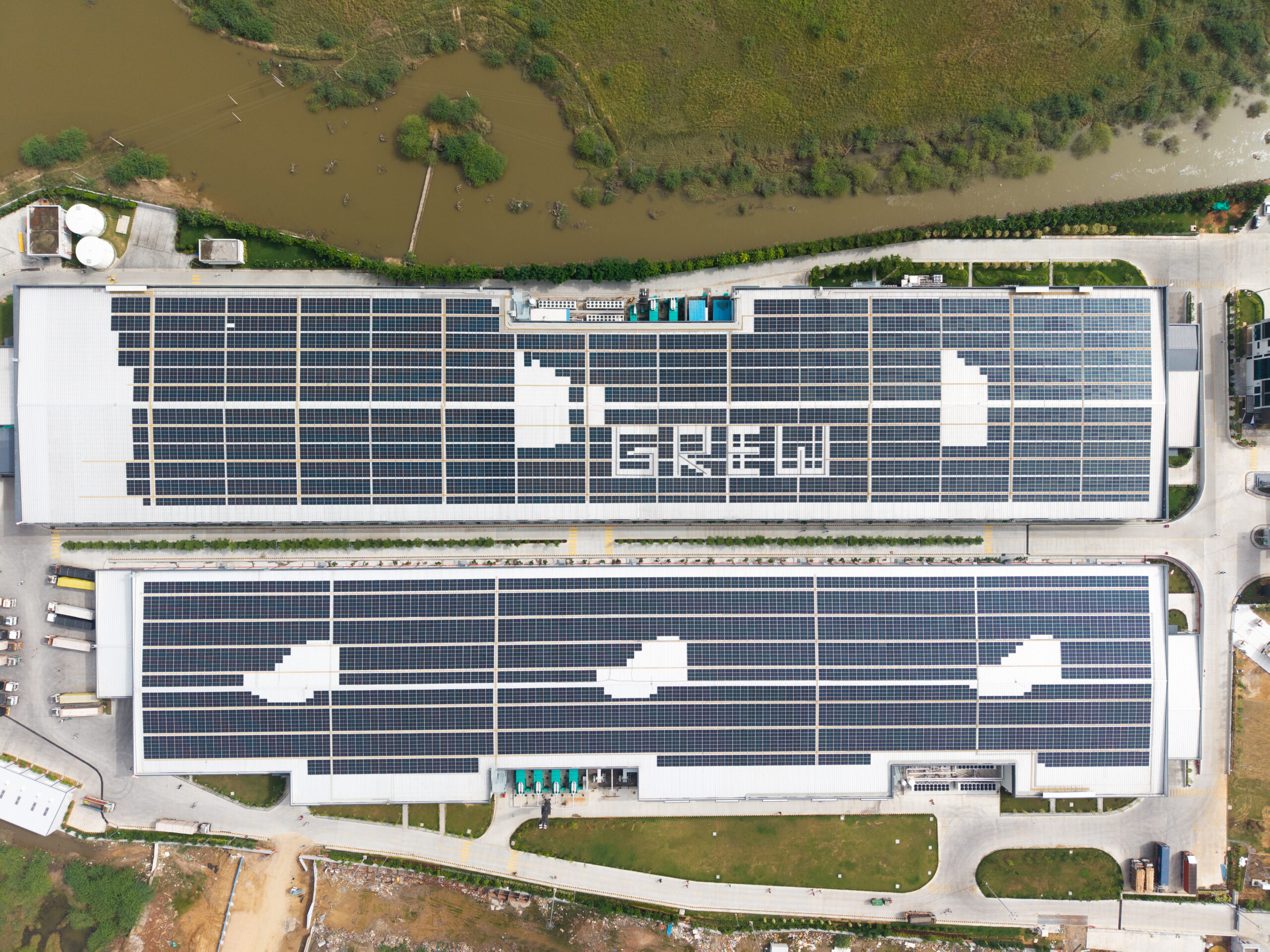
India’s solar sector posted strong growth through the 2026 monsoon period. Per Saur Energy’s reporting of Central Electricity Authority data, national solar generation rose 57.1% year-on-year in June 2026 to 20,307.54 million units, and climbed 45.9% for the April-June quarter to 62,791.14 million units. That growth reflects installed capacity reaching 162.15 GW by June 2026, up from 116.25 GW a year earlier, an addition of nearly 46 GW in twelve months. The monsoon itself, meanwhile, ran below normal: IMD’s seasonal forecast placed June-September rainfall at roughly 90% of the long-period average, and July rainfall came in close to 19% below normal nationally, with Northeast India, Central India, and the South Peninsula all trailing their respective normals. Two things were true about the same season, and neither cancels the other out.
The National Number Doesn’t Show What a Single Plant Experienced
A headline generation increase driven primarily by new capacity tells an EPC or developer almost nothing about how an individual plant’s output-per-installed-MW held up through the season. Capacity growth at this scale, nearly 46 GW added in a year, is large enough to mask a real seasonal drag entirely at the national aggregate level, even where that drag was material at a specific site. This is the gap most generation planning misses: a national or even state-level number moving upward says nothing about whether a given plant underperformed its own baseline during the exact weeks cloud cover was heaviest over its specific location. The relevant comparison for planning purposes isn’t this year’s national total against last year’s, it’s a plant’s actual monsoon-period output against its own pre-monsoon baseline, adjusted for the capacity it had at the time.
What the Season Actually Did to Output at the Plant Level
Below-normal, unevenly distributed rainfall changes the generation trade-off in a specific way. Sustained cloud cover increases the share of diffuse irradiance reaching a module relative to direct beam radiation, and diffuse-heavy conditions typically reduce output more than an equivalent amount of rainfall does on its own. Rainfall itself cuts the other way: it periodically clears dust and particulate buildup from a module’s surface, so a season with fewer rainfall days doesn’t only mean less cloud-driven loss, it also means fewer natural cleaning events, allowing soiling to accumulate over longer stretches between rains. A below-normal season like 2026 produced less diffuse-irradiance loss in the driest regions, offset to some degree by heavier soiling accumulation than a normal season would have allowed. Humidity moved independently of rainfall volume through the season. Even in regions where rainfall ran below normal, ambient humidity remained high enough to affect cell temperature behavior and elevate hot-spot risk at junction points, since humidity levels and rainfall totals track different atmospheric conditions rather than moving together.
Where Module Design Held Up or Didn’t
Module architecture responded to these conditions unevenly. Bifacial modules captured measurably more of the diffuse and ground-reflected light dominating the sky during overcast stretches than mono-facial modules did, since bifacial rear-side generation is suited specifically to the low-direct, high-diffuse conditions a below-normal but still cloud-heavy monsoon produces. Moisture ingress risk tracked with humidity exposure rather than rainfall totals, which meant junction box sealing and encapsulant integrity mattered across the full season regardless of how much rain fell in a given region. Modules built to IP68 junction box standards, rated for continuous submersion resistance rather than incidental splash protection, held a measurable advantage through sustained humidity exposure that persisted even in the drier parts of the country.
Why a Flat Seasonal Number Fails at the Plant Level
Solar generation monsoon 2026 forecasting built on a single national assumption will keep missing the variability that actually determines site-level output. A model that treats “monsoon reduces output by X%” as a flat national figure overlooks the regional divergence IMD’s own data showed this season, and a forecast that treats diffuse-irradiance loss and soiling accumulation as offsetting factors risks understating both, since they don’t necessarily move in opposite directions at the same site. Wet-dry cycling, the repeated expansion and contraction a module undergoes moving between saturated humidity and drier stretches, is a degradation factor worth tracking across the full season rather than only during the heaviest rainfall weeks. Post-monsoon inspection should be tied to a season’s actual regional rainfall pattern rather than a fixed calendar date, since a below-normal season with concentrated dry stretches leaves a different soiling and moisture profile on a module than a heavy, evenly distributed one would.
Where This Points for Next Season
Regional, month-by-month data of the kind IMD already publishes gives a more useful planning baseline than a single seasonal average, particularly given how much a below-normal headline figure masked at the plant level in 2026. Solar panel performance rainy season planning should start from that plant-level baseline, not the national growth figure. GREW Solar’s All Black Module, built with an IP68-rated junction box and bifacial cell architecture, reflects design choices suited to this kind of variable exposure rather than an assumption of uniform monsoon conditions. This season’s national generation growth came from capacity additions. The monsoon’s effect on individual plant output ran independently of that number, and that is the distinction worth carrying into next year’s planning cycle.

