
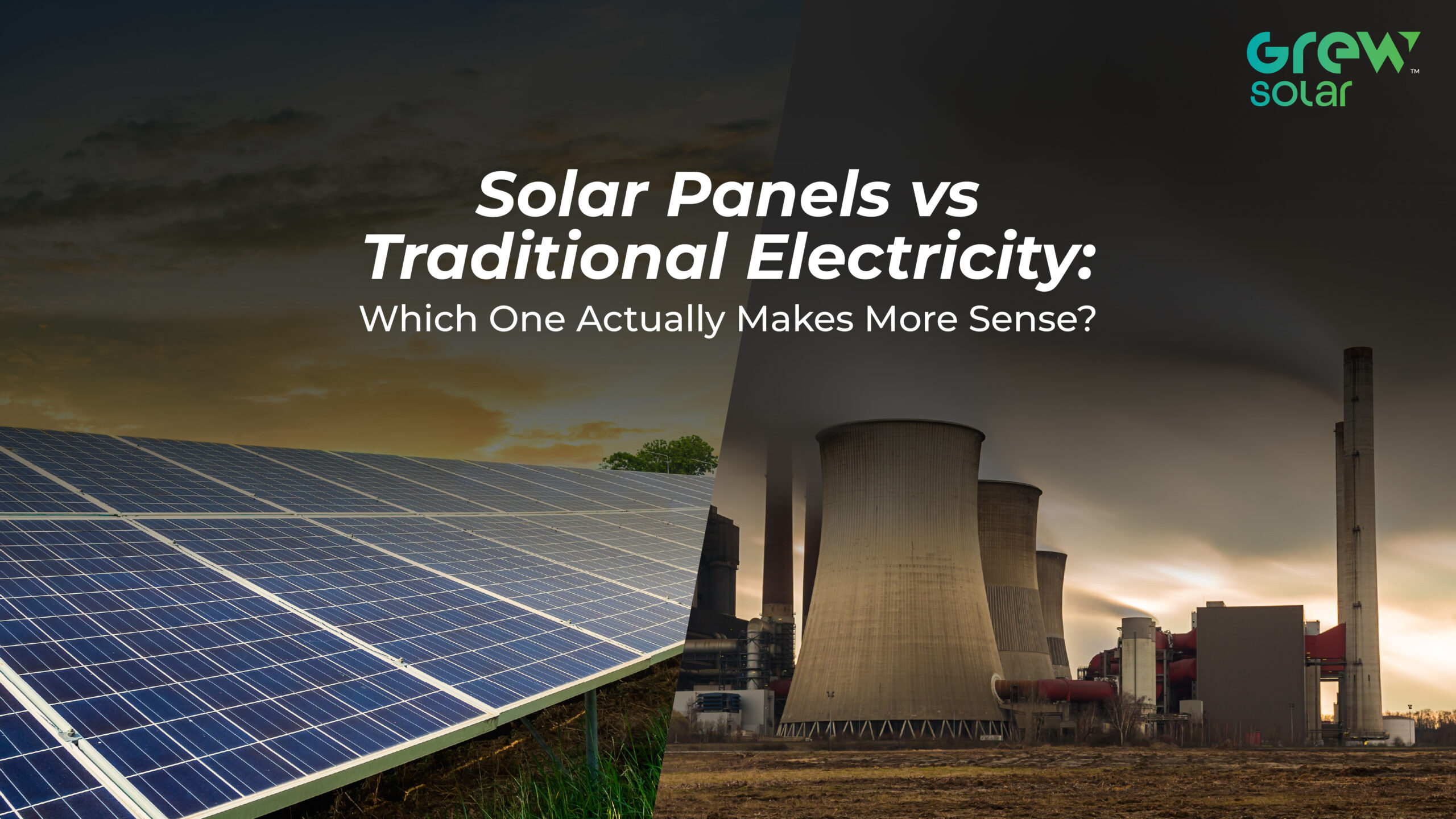
Electricity has long been a constant in everyday use. It powers everything we rely on, and for the most part, people haven’t had to think much about where it comes from or how it is priced. That model still holds, but rising tariffs and changing energy needs are now making people take a closer look at their options.
Solar energy has become one of the most considered alternatives in this shift. The comparison today is not just about access to power, but about how energy is generated, how it is managed, and how it holds up over time.
Understanding Traditional Electricity Generation
Electricity has traditionally been generated at centralized power plants and then transmitted over long distances before reaching end users. This system has supported energy demand for decades and continues to play an essential role.
At the same time, the way it is priced is influenced by factors outside the user’s control. Tariffs tend to increase over time, and changes in fuel costs or supply conditions can affect overall pricing. This makes it difficult to plan energy costs with certainty over the long term.
While the supply itself is generally reliable, the cost of that supply is not always as stable.
How Solar Works Differently
Solar changes how energy is generated and used. Instead of depending entirely on external supply, electricity is produced closer to where it is consumed.
Solar energy also reduces reliance on the grid and introduces a level of control over energy generation. In the regions with strong and consistent sunlight, solar becomes a practical and scalable option for different types of energy needs and usage.
The shift is also structural in nature since here, energy moves from being entirely supplied to being partially self-generated.
Cost in a Longer-Term View
One of the key differences between solar and traditional electricity is the cost is viewed over time.
Traditional electricity generation does not need upfront investment, but tariffs increase gradually which leads to rising energy expenses over the years.
When it comes to generating electricity with solar, it involves an initial investment, but once the installation is finished, it offers a stable cost structure. Over time, this allows for better visibility and control over energy-related expenses.
The comparison here is not limited to immediate or initial costs but also they evolve over time.
Performance and Efficiency
Energy performance depends on how efficiently power is generated and delivered.
With traditional electricity, some energy loss is experienced during transmission but solar systems generate power closer to the point of use which reduces these losses.
Modern solar modules are designed to operate under a range of conditions, including high temperatures and partial shading. However, performance is closely linked to system design and execution. Well-planned systems deliver consistent output, while gaps in design or installation can affect performance.
Environmental Considerations
Energy decisions are directly related to environmental impact. Traditional electricity generation involves emissions and resource use, which are now being looked at and reviewed more closely than before.
Solar offers a cleaner alternative, as it relies on renewable energy without direct emissions. This makes it relevant not only from a cost perspective, but also from a long-term sustainability standpoint.
Why System Quality Matters
Solar performance is affected by a variety of factors besides installation such as module quality, manufacturing consistency, system design, and execution.
Even well-designed systems will underperform if there are inconsistencies in production or gaps in implementation. This is why choosing the right solar panel company is very important.
A solar company’s manufacturing standards, testing processes, and system planning all play a role in how reliably a system performs over time.
GREW Solar: The Most Trusted Solar Manufacturer
GREW Solar is one of the youngest-and-fastest manufacturing companies that is known for its manufacturing quality and performance consistency across its solar PV module portfolio. With a roadmap of 11.0 GW of PV module manufacturing capacity and 8.0 GW in PV cell manufacturing capacity in 2026, the company is building scale alongside systems to support solar supply, and strengthen domestic solar manufacturing.
The G12R and M10R solar PV modules are ALMM-certified and have been developed with a focus on efficiency and long-term performance, supported by in-house testing and process control.
The Future of Energy
The way energy is produced and used is gradually evolving. Traditional electricity will continue to remain an important part of the system, but there is a clear shift toward solutions that offer greater control and long-term stability.
Solar is becoming a part of this shift. It allows energy to be generated closer to where it is used and introduces a more predictable approach to managing energy needs. As adoption increases, the focus is moving beyond cost to include performance, reliability, and sustainability.
The future of energy lies in combining these approaches to create systems that are both stable and adaptable.

