
A lender financing a large solar project is not actually evaluating a module. They are evaluating a bet on manufacturing discipline that has to hold for twenty-five years, made using only what can be verified today. Wattage and price per watt are the two numbers procurement sheets lead with, and they are also the two numbers that say the least about whether that bet is sound. A 600W or 635W module can look identical to a competitor’s on paper while sitting behind a completely different level of production consistency, warranty support, and long-term reliability, and once thousands of modules are installed across a site, that gap stops being theoretical.
What Lenders Are Actually Trying to Answer
Bankability exists as a category because a financial institution cannot directly observe twenty-five years of future module performance, so it evaluates something it can observe: whether the manufacturer behind the module has the systems, track record, and financial standing to make that future performance plausible. Financing for a large plant is typically structured around expected generation over the project’s operating life, so if modules underperform, degrade faster than specified, or develop widespread quality issues, the financial model built around them is what actually breaks.
The Manufacturer Question Comes Before the Module Question
For a large project, the first real question is rarely about the module itself. It is about the company producing it. Supplying modules at the volume a utility-scale project requires, often into the tens or hundreds of thousands of units, demands production capacity, quality systems, and operational stability that a smaller or newer manufacturer may not yet have built. A developer evaluating a solar PV module manufacturer in India for this kind of order is effectively asking whether the company can maintain consistent output, honor warranty obligations years after delivery, and still be operationally intact if a claim needs to be resolved a decade into the project. That question extends past the warranty document itself: a manufacturer’s ability to provide technical assistance after installation, troubleshooting a performance issue on-site, supporting an inspection, answering an EPC’s question mid-project, is a separate capability from simply honoring a warranty claim on paper, and it is one large buyers increasingly weigh as part of the same due diligence. A manufacturer with an established production facility, documented quality processes, and a real after-sales function gives a project stakeholder something to verify. A manufacturer without those is asking to be trusted on reputation alone.
Technology Sets a Ceiling, Manufacturing Discipline Sets the Floor
Module technology still matters, but it answers a narrower question than most procurement conversations treat it as answering. N-type TOPCon has become a standard choice for high-efficiency projects because of its efficiency ceiling and long-term performance characteristics relative to older cell architectures. But two manufacturers can build modules on the same TOPCon platform and still produce meaningfully different products, because the technology sets what is possible, not what is actually delivered. The manufacturing quality behind that technology, testing rigor, defect detection, and process consistency, determines how close a given batch comes to that ceiling. The practical question for a developer is therefore not only which technology a module uses, but how consistently the manufacturer behind it can reproduce that technology’s stated performance across a full production run.
Certification and Testing Are a Separate Question From Technology
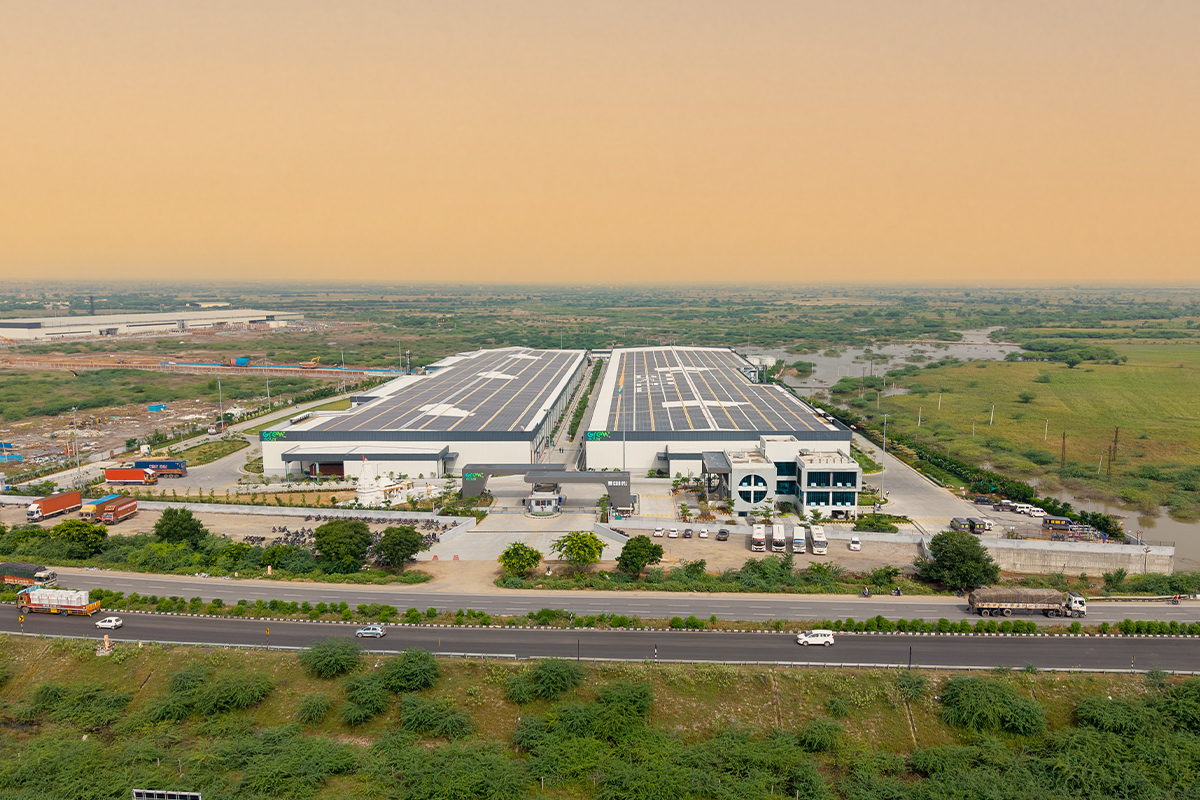
Choosing the right cell technology and verifying that a specific manufacturer’s modules actually meet durability standards are two different due-diligence steps, and treating them as one is where procurement decisions go wrong. Large projects need evidence that modules have been tested against relevant mechanical, environmental, and electrical performance requirements, not just a technology label. This matters because problems not caught during production become considerably more expensive once modules are installed in the field, at which point a defect is no longer a factory-floor fix but a site visit, a warranty claim, or in the worst case a generation shortfall the project has to absorb. GREW Solar’s approach illustrates what that discipline looks like in practice: its manufacturing facility runs 100% string-level electroluminescence testing with triple-stage inspection, alongside in-house laboratory checks at multiple production stages, and its modules are certified to IEC 61215, a standard that itself requires mechanical load and hail-impact testing rather than leaving durability claims to be taken on faith.
Warranty Numbers Mean Nothing Without the Distinction Behind Them
A 25- or 30-year performance warranty sounds reassuring precisely because it is a large, round, reassuring-sounding number, which is exactly why the number alone is not useful. Product warranty and performance warranty cover entirely different failure modes: the first addresses manufacturing defects in the physical module, the second addresses whether the module maintains its specified power output over time, and a warranty document that blends the two into a single headline figure is hiding the more important information rather than simplifying it. The degradation rate specified underneath that warranty is where the real financial exposure sits. Per NREL’s Fleet Performance Data Initiative, N-type technologies including TOPCon show annual degradation in the 0.3% to 0.4% range, against 0.55% to 0.7% for older P-type PERC architecture, a gap that looks small in isolation but compounds meaningfully across a large module count and a multi-decade holding period. For a utility-scale project, the difference between those two degradation bands can move a generation forecast by a margin that matters to the project’s actual economics, not just its marketing sheet.
The Parts of Bankability That Don’t Show Up on a Spec Sheet
A module performing well under laboratory conditions says little about whether a manufacturer can reproduce that performance across the tens or hundreds of thousands of units a large plant actually requires, which is why automated production controls, batch-level EL testing, and traceability from finished module back to production batch matter more at scale than a single strong test result. Supply reliability sits alongside that concern rather than separate from it: solar projects run on fixed construction and commissioning schedules, and a manufacturer that cannot deliver the required volume within that window creates delays that ripple through EPC timelines regardless of how well the module itself performs once installed.
What This Actually Looks Like in a Procurement Decision
Put together, this reframes what price-per-watt is actually for in this evaluation. It still belongs in the comparison. It stops being the factor the rest of the decision gets built around, and becomes one input weighed against manufacturer track record, testing depth, warranty structure, and after-sales capability rather than the number a procurement sheet defaults to first.
Why This Changes What “Best Module” Actually Means
None of this reduces to a single specification that makes a module bankable. A module can carry high efficiency with weak warranty backing. Another can sit behind an established manufacturer while running older technology. A third can be priced competitively while lacking the production scale a large order requires. Bankability sits at the intersection of technology, manufacturing quality, testing rigor, warranty structure, company stability, and supply capability, and no single factor on that list substitutes for the others. This is also why India’s shift toward larger, more integrated manufacturing capacity changes the underlying conversation for anyone sourcing a bankable solar module today: a manufacturer building cells and modules under one roof, with documented testing at every stage, is offering something closer to what a lender is actually trying to verify than a manufacturer offering the same nameplate wattage from a thinner production base. GREW Solar’s own product range, including modules reaching up to 635Wp at 23.51% efficiency, sits inside that broader shift, not apart from it.
Bankability, in the end, is a question about who is still standing behind the module when the warranty document actually gets tested.

