Categories
Uncategorized

GREW Solar: One of India’s Youngest and Fastest Growing Solar Panel Manufacturers

When businesses first explore solar, the conversation often begins with cost. Usually, the questions around solar panel price and long-term value come before the questions on technology or manufacturing capacity. While pricing is one of the important factors, experienced buyers know that solar decisions are shaped just as much by who manufactures the solar PV modules as by what they cost. This is where understanding the role of solar panel manufacturers becomes important.


GREW Solar is part of a new generation of Indian manufacturers shaping this shift. Backed by a long-standing industrial legacy, the company has grown rapidly by focusing on scale, quality, and process discipline. As one of the country’s youngest and fastest-growing solar panel manufacturers, GREW Solar represents how manufacturing-first thinking is becoming central to the clean energy transition.


In today’s market, solar panel prices are influenced by several factors beyond raw materials. Manufacturing automation, testing standards, technology choice, and supply reliability all play a role. Panels that look similar on paper can perform very differently over time, especially in demanding operating conditions. This is why buyers increasingly evaluate price in relation to performance consistency and expected output over the full life of the system.

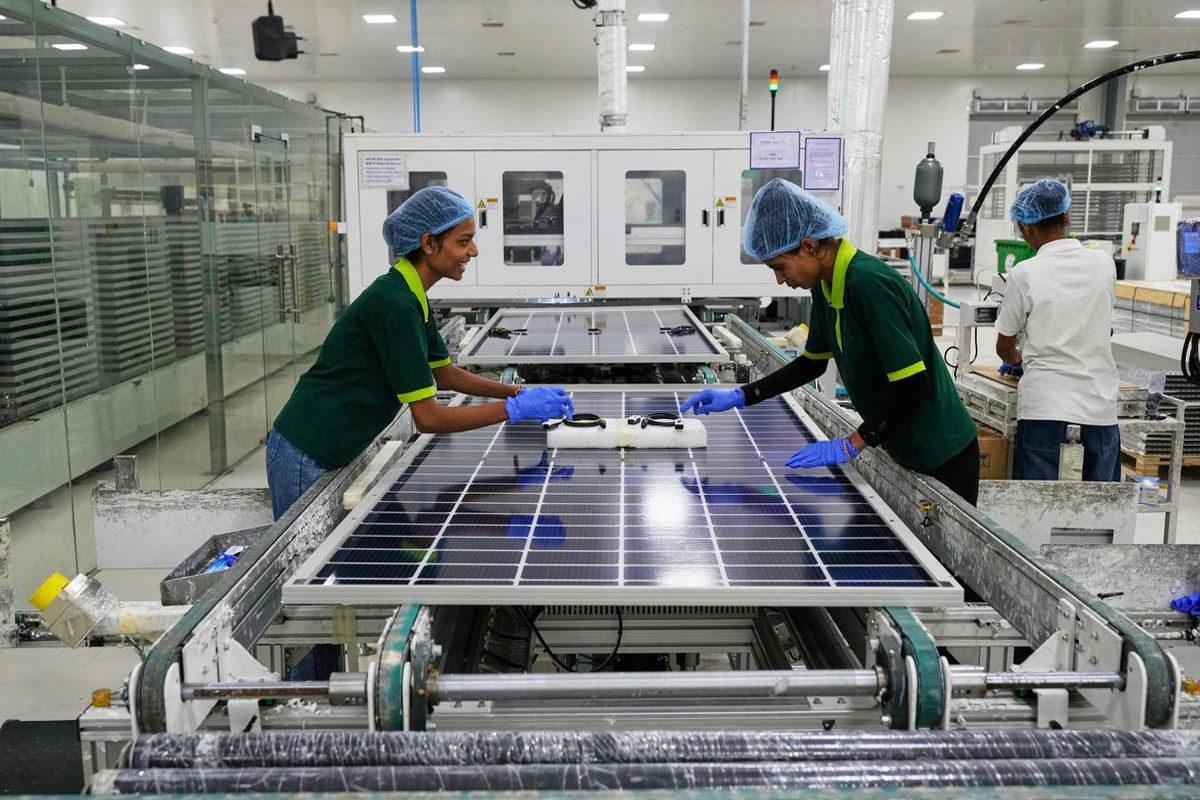
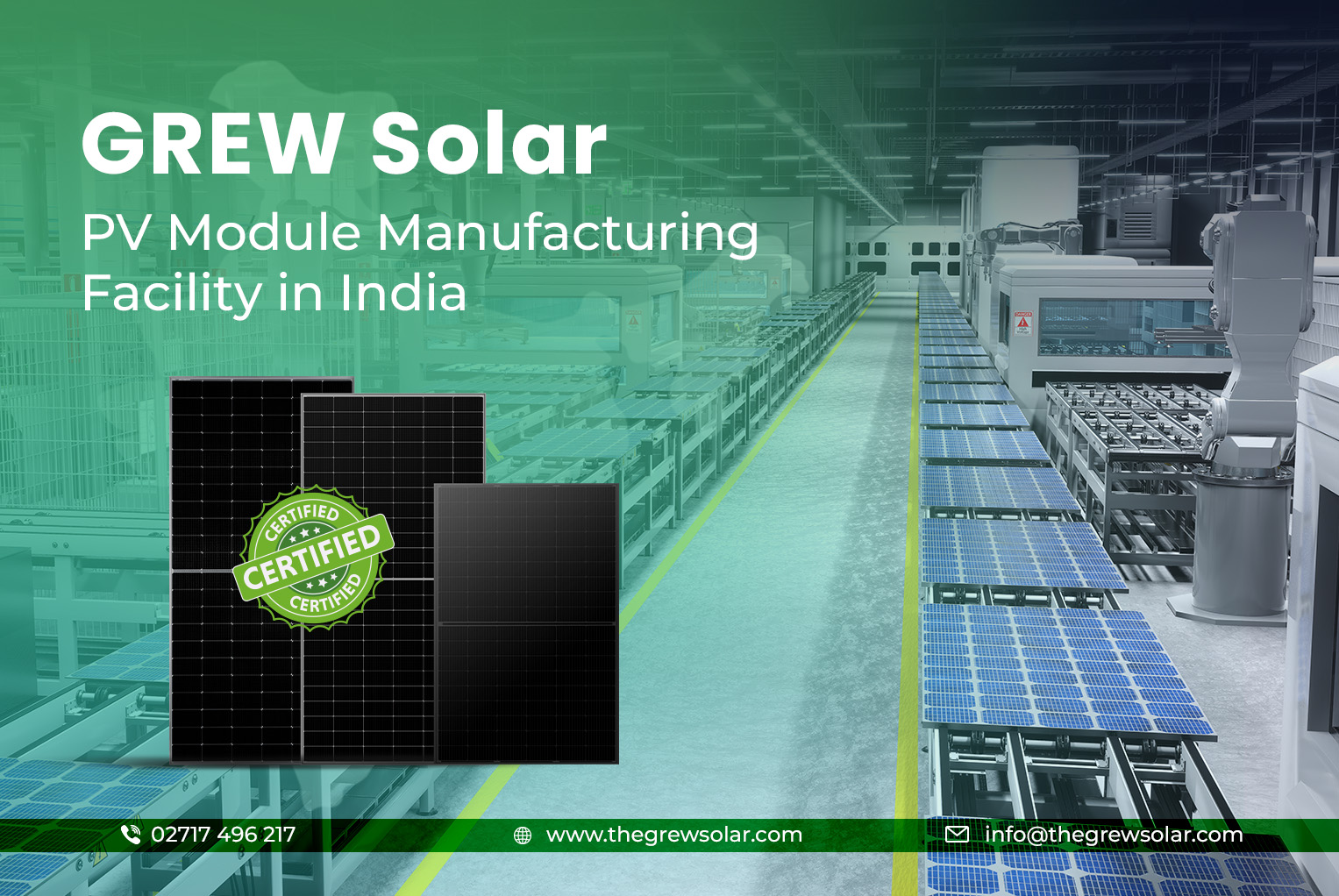
Among the best solar panel companies, control over the manufacturing processes has become a key differentiator. In-house testing, certified materials, and disciplines manufacturing processes reduce variations and improves reliability. GREW Solar’s manufacturing processes reflects this focus, with large-scale module production supported by stringent quality assurance systems designed to meet both domestic and global quality standards.

Web 2.0 Image title 2

Another factor that impacts decision making for buyers today is how manufacturers think and plan for long-term value. For developers and EPCs, the lowest solar panel price does not always mean it will cause the lowest cost of energy. Degradation rates, efficiency stability, and predictable performance also play a role here. This is why many buyers look beyond short-term cost savings and instead choose solar panel manufacturers based on their capability to deliver consistent results.


As the solar market matures, the criteria to be one of the best solar panel companies is also changing. Manufacturing capacity alone is not enough, companies need to demonstrate manufacturing expertise, technology readiness, along with a clear roadmap for growth. GREW Solar’s expansion roadmap reflects this long term thinking, with a focus on building capabilities along with capacity to support reliable supply and long-term partnerships.


For those who are new to the solar industry, only by understanding how solar panel manufacturers operate can they know how to decide on one. While pricing, performance, and trust are related to each other, the best solar panel manufacturers focus on all three factors. With India’s clean energy landscape growing bigger, manufacturers that can balance capacity with quality will play an important role in shaping the future of solar energy.

Categories
Uncategorized

Choosing the Right Solar PV Modules: Why Manufacturing Quality Matters

Commercial and utility-scale solar projects are long-term energy assets. They are expected to perform for 25 to 30 years, deliver stable output year after year and meet the financial expectations set at the design stage. Due to this, choosing the right solar PV modules is an important decision.


At first glance, many solar PV modules look similar. Their datasheets show comparable wattage, similar efficiencies and almost identical dimensions. But in reality, solar PV modules perform very differently in the field. The difference rarely comes from what you see on the outside, it comes from how the solar PV module is built, how it is tested and the quality standards followed during production. Good manufacturing protects your investment while weak manufacturing exposes it to long-term risk.


Why Quality Matters in Commercial Solar

In commercial and utility settings, solar PV modules operate under tougher and more varied conditions than typical residential rooftops. They face strong wind loads, shifting temperatures, dust, humidity, long operating hours and higher electrical stress. Even a small drop in output or an early failure can impact the project’s financial returns.


When plants run at the megawatt scale, the consequences of poor-quality solar PV modules grow quickly. A minor defect replicated across hundreds or thousands of modules can result in major losses in energy yield and additional O&M expenses. That is why choosing solar PV modules is not just a procurement decision, it is also a long-term performance decision.


GREW Solar operates only in the solar PV module manufacturing industry. This focus means its entire manufacturing approach is designed around consistency, durability and reliability at scale, not short-term or low-volume use cases.

What “Quality” Means in Solar Panels

Solar panel quality cannot be judged by wattage alone. Two modules may both be rated at 550 Wp, but their real-world output and long-term stability may differ significantly.

Quality in solar PV modules comes from:
• the materials used
• the precision of the production line
• the way cells are handled and connected
• the strength of lamination and framing
• the stability and repetitiveness of the manufacturing process
• the testing carried out before the modules reach the field


A good panel lasts. A weak panel may meet initial performance numbers but degrade faster or develop issues once it faces years of outdoor stress.


GREW Solar’s manufacturing is built around reducing this uncertainty. Automated lines, strict process controls and reliable testing practices make sure that each module performs the way it is designed to, for decades.


Why Manufacturing Quality Shapes Long-Term Performance

Most long-term problems in solar PV modules begin in the factory, even if they are not visible at first. Issues like microcracks, weak soldering or inconsistent lamination might not show up in early production tests, but they often surface after months or years in the field.


For commercial systems, this matters because microcracks reduce string performance, weak cell connections create hotspots, moisture entry from poor lamination accelerates degradation, PID (Potential Induced Degradation) cuts output, and junction-box issues cause safety risks and downtime.


When a project is 10 MW, 50 MW or 100 MW, these issues multiply.


GREW Solar reduces these risks through its controlled production environment and in-line quality checks. EL (electroluminescence) imaging helps detect even small cracks or inconsistencies early. Performance checks and visual inspections remove solar PV modules that do not meet standards before they become part of a large plant.


Where Manufacturing Quality Actually Comes From

You don’t need to understand every technical detail of the production process to know whether a manufacturer builds reliable modules. What matters is the discipline of the process and the strength of the checks behind it.


Quality comes from steady handling of solar cells to prevent cracks, uniform soldering and electrical connections, strong lamination that protects against heat, dust and moisture, sturdy framing that withstands mechanical loads, and electrical safety checks at multiple points. When any of these steps are inconsistent, long-term problems follow.


GREW Solar’s manufacturing approach follows this philosophy. Each module moves through automated and controlled stages, from cell testing and stringing to lamination and framing with checks at every step. In-line EL tests catch defects early. The Quality & Reliability Lab, equipped for 25 types of IEC tests, verifies module durability for conditions common in commercial and utility-scale projects. This ensures consistency not only within a module, but across entire batches.


Common Failure Modes

Failure modes in solar PV modules are well-known across the industry, and most of them can be traced back to poor manufacturing or weak quality control.


• PID (Potential Induced Degradation)

Reduces output when solar PV modules operate at high voltage for long periods. In large projects, PID can affect entire strings or arrays, leading to major losses.


• Hotspots

Form when microcracks disrupt current flow. Hotspots reduce output and can damage cells over time.


• Backsheet cracking

Allows moisture into the module, harming internal components and accelerating degradation.


• Delamination

Happens when the encapsulant does not bond properly. This weakens protection and reduces panel lifespan.


• Junction-box failures

A safety risk and a major cause of downtime.

Commercial and utility plants depend on modules that avoid these issues. GREW Solar’s reliability tests such as mechanical load, environmental chamber tests, hail tests and PID evaluations help catch vulnerabilities before modules ever leave the factory floor.


Important Certifications for Solar PV Modules

Certifications are not a guarantee of “the best panel,” but they confirm that the module meets basic performance and safety requirements.

For commercial buyers in India:
• BIS / IS 14286 is the mandatory standard.
• IEC certifications validate design, safety and resistance to conditions like corrosion or PID.
• ISO-certified factories show the manufacturer follows disciplined processes for quality, safety and environmental management.


GREW Solar’s manufacturing and testing systems are already built to meet these global requirements. Its processes follow the same discipline demanded by these certifications, and its reliability lab supports advanced testing for long-term performance.


Traceability & Integrated Manufacturing

Commercial-scale buyers now look beyond the panel itself. They want to know where the materials come from, whether the manufacturing process is consistent, whether the supply chain is stable, and how the manufacturer controls quality across batches. This is where traceability and integration matter.


When a manufacturer control more of the production chain [ingots, wafers, and cells], there are fewer unknowns and more consistency across large orders.


GREW Solar’s backward integration strategy, which includes future wafer and cell production, brings more transparency and control to its supply chain. This helps ensure that BOM materials remain consistent and that quality is predictable on every delivery.


GREW Solar’s Approach to Quality

GREW Solar’s manufacturing ecosystem is built specifically for commercial and utility-scale requirements. Its production lines are automated and controlled, helping reduce variability across modules. The company’s in-house quality & reliability lab performs advanced tests including PID resistance checks, mechanical load tests, hail impact tests, UV exposure and thermal cycling to evaluate how solar PV modules behave in real-world environments.


Key elements of GREW Solar’s quality approach include:
• Triple EL testing to identify hidden defects,
• PASAN A++ Sun Simulator for accurate performance measurement,
• ISO 9001, ISO 14001 and ISO 45001 certified operations,
• Industrial lamination and framing for long-term durability,
• Backward integration for supply-chain control,
• Modules engineered for high-performance commercial settings.


These systems ensure that GREW Solar’s PV modules are not only designed for high output but built for long-term stability and performance consistency.


Quality Today Protects Performance Tomorrow

Choosing the right solar PV modules is one of the most important decisions in any commercial or utility-scale project. Strong manufacturing quality leads to higher energy output, lower maintenance, more stable performance and a better return on investment over 25 to 30 years.


Quality is a foundation and manufacturers like GREW Solar, who focus on disciplined production, rigorous testing and supply-chain control, represent how good manufacturing can turn a panel into a reliable long-term asset.

Categories
Uncategorized

GREW Solar: How Manufacturing Quality Shapes Solar Panel Prices and Long – Term Performance

As India is chasing the renewable energy targets, solar has become one of the most important renewable energy sources to fulfil this goal. Given the growth and demand of solar, nowadays, it is no longer just about clean energy adoption but also questions of performance, reliability, and long-term value. So, assessing solar panel prices is just as important as assessing the capabilities of solar panel manufacturers who make them.


While solar panel price is often the first metric companies look at, it rarely shows the full picture. Two modules with similar ratings can perform very differently over a 25–30 year lifecycle. There are factors such as cell technology, quality control processes, and manufacturing consistency that play a far bigger role in determining actual returns on investment than headline numbers alone.


Why Manufacturing Quality Matters More Than Just Price


Solar panels and manufacturing quality discussion


India now has many large-scale solar panel manufacturers, but not all of them are built or operate in the same way. Advanced automation, in-line testing, and certified raw materials are some of the factors which directly impact a solar manufacturer’s output stability and degradation rates of its panels over time. This is why experienced buyers evaluate solar panel prices together with a company’s manufacturing depth and process integrity.


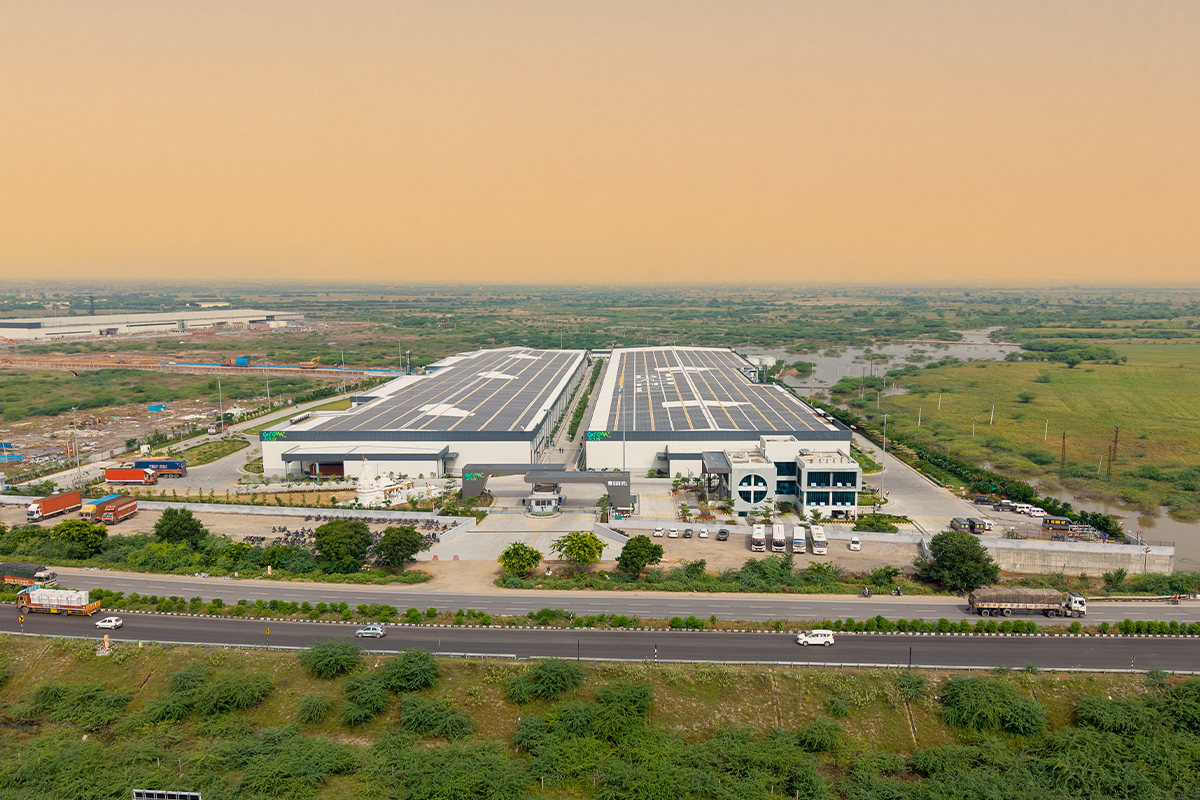
GREW Solar has emerged as one of India’s youngest and fastest-growing manufacturers by focusing on this exact balance. Backed by the Chiripal Group’s five-decade manufacturing legacy, GREW Solar operates a fully automated 6.5 GW solar PV module manufacturing facility in Rajasthan and is building an integrated ecosystem that includes cells and wafers manufacturing too. This approach will allow them a more tighter control over quality, supply timelines, and performance consistency.


How the Best Solar Panel Companies Think Differently


The best solar panel companies are no longer competing only on capacity numbers. They are also heavily investing in research to advance solar technologies like TOPCon cells, dual-glass modules, and advanced EL testing systems. This is because technology innovations improve efficiency, enhance weak-light performance, and reduce long-term power loss.


Solar panel manufacturing facility interior


GREW Solar’s modules are designed with these priorities in mind. From 100% multi-stage EL testing to ISO-certified facility, every step of the manufacturing process is structured to deliver dependable output at scale. This allows developers to evaluate solar panel prices not as a short-term cost, but as a long-term performance equation.


Choosing the Right Partner in a Growing Market


As the Indian solar market keeps on growing, buyers are going to become even more perceptive of the modules and the manufacturing ecosystems behind them. The decision about buying solar modules is no longer just about who offers the lowest solar panel price, but also about which manufacturers can consistently deliver quality, trust, and support for years.


Among India’s new-age solar panel manufacturers, GREW Solar represents a manufacturing-led approach that aligns technology, scale, and reliability. Being a part of one the best solar panel companies in India, GREW Solar is a company that is built for long-term performance and growth.


In the advancing clean energy landscape, choosing a trusted solar module manufacturer today will define the outcomes for a business for years to come.

Categories
Uncategorized

The Role of Certifications in Solar PV Module Manufacturing

As solar becomes one of the world’s most important sources of energy, the expectations placed on solar modules have changed. A decade ago, buyers compared panels mostly by wattage and price but today, the conversation is about durability, reliability, safety, traceability, and long-term performance. Behind all these expectations lies one powerful factor, certification.


Certifications qualify a product, but they also build confidence for developers, EPCs, utilities, financiers, insurance providers, and end users. As solar markets grow more interconnected, certifications play a vital role in ensuring that modules manufactured in one country can be safely deployed in another.


For manufacturers such as GREW Solar, which serve India’s fast-expanding domestic market and the international market, certifications and traceability are the foundation of global readiness.


Why Certifications Matter in Solar Module Manufacturing


Solar modules are exposed to decades of weather, heat, humidity, mechanical stress, and electrical load. Without a reliable system of standards, it would be impossible to guarantee how they perform over time.

Certifications exist to answer a few fundamental questions such as:

  • Will the module perform consistently for 25+ years?
  • Is it safe to install on homes, commercial rooftops, or utility-scale sites?
  • Can it withstand real-world conditions like heat, dust, corrosion,snow, strong winds, hail, storms?
  • Has it been manufactured using processes that ensure repeatable quality?
  • Does the product’s supply chain meet regulatory and ethical requirements?

By setting clear testing and validation benchmarks, certifications help reduce risks and protect investments in any project. They also ensure that solar installations meet the safety and performance standards required by local authorities and utilities.

Certification Pathways in India: BIS, IS Standards & ALMM


India has built one of the most comprehensive certification ecosystems in the solar industry, shaped by the country’s rapid growth in installations and the need to standardize quality across diverse project environments.

• BIS / IS 14286 (Mandatory Standard for India)


BIS certification is compulsory for any solar module sold or deployed in India, and IS 14286 forms the foundation of this requirement. Adapted from the IEC global standards, it evaluates whether a module is structurally sound, electrically safe and capable of maintaining performance over many years of operation.

It also acts as the first safeguard against low-quality or unverified modules entering the Indian market.

• ALMM (Approved List of Models & Manufacturers)

The ALMM is not a testing standard but a quality assurance mechanism used by the Ministry of New and Renewable Energy (MNRE). It verifies whether manufacturers have the processes, traceability and factory-level controls needed to consistently deliver certified modules.

ALMM ensures that the modules supplied for government-linked projects come from verified facilities following standardized production practices. This improves transparency and reduces the risk of inconsistent performance, particularly for large utility-scale installations.

• Extended IEC Testing for Indian Climate Conditions

Beyond mandatory BIS compliance, manufacturers also rely on extended IEC tests to demonstrate suitability for India’s varied and often harsh environments. These tests provide deeper insight into how modules behave under specific regional stressors.

The Global Foundation: IEC Certifications

Across most global markets, including India, the quality and durability of a solar module are proven through a set of IEC certifications that form the industry’s baseline for performance and safety.

IEC 61215 establishes that a module’s design can withstand decades of real-world conditions, while IEC 61730 confirms its electrical and structural safety. Additionally, other standards address specific environmental stresses such as IEC 62804 for PID resistance, IEC 62716 for ammonia exposure, IEC 61701 for salt-mist corrosion, IEC 60068 for sand and dust, and IEC 62759 for transport durability. Many manufacturers also complete extended “3×IEC” reliability testing, which pushes modules beyond standard cycles to validate long-term resilience.

Together, these certifications create the global benchmark that modules must meet before entering most markets. India builds its mandatory requirements on this IEC framework, while the United States adds an additional layer of UL-driven safety and code compliance.

Certification Frameworks Shaping the U.S. Market


As solar manufacturers expand into international markets, it becomes important to recognise that different regions follow their own regulatory frameworks. While India relies on IEC-based testing and BIS compliance, the United States evaluates modules through UL safety standards and region-specific building and electrical codes.


These requirements confirm that a module is safe to install across American residential, commercial and utility-scale environments, even though the technical aspects differ from India’s. The underlying purpose, however, is the same, which is ensuring that every module deployed in the field delivers reliable, long-term performance. For manufacturers operating across both regions, this simply translates into maintaining the compliance pathways as per each market’s expectations.

Supply-Chain Traceability & Domestic-Content Rules


As the global solar sector matures, buyers and regulators increasingly want transparency about how a module performs, where it comes from and how responsibly it was made. This shift is redefining what quality assurance means for manufacturers.


In India, traceability appears in frameworks such as ALMM, where factory audits, documentation checks and process validation help ensure that certified modules are produced within approved facilities using verified materials. Programs like PLI further reinforce domestic value-add requirements, encouraging manufacturers to document and track their supply chains with greater clarity.


In the United States, traceability has become even more central due to policies like the Inflation Reduction Act (IRA). Under this system, project developers, utilities and financiers actively assess the origin of components like wafers, cells, frames and junction boxes to qualify for incentives. This demands clear, auditable evidence of sourcing, production routes and domestic content.


Across both markets, certifications and transparency offer a fuller picture of quality, accountability and compliance for long-term solar deployment.

The GREW Solar Approach


Meeting the expectations of both certification and traceability requires a blend of disciplined engineering, robust quality systems and transparent manufacturing processes. GREW Solar aligns with this shift with a compliance framework that’s built to serve both domestic and international markets.


GREW Solar’s PV modules are undergoing compliance processes for key global standards, including IEC 61215 for design qualification, IEC 61730 for safety, IEC 61701 for salt-mist exposure, IEC 62716 for ammonia resistance, IEC 60068 for sand and dust, IEC 62804 for PID resistance, IEC 62759 for transport durability and extended “3×IEC” reliability evaluations. These certifications, once completed, will reinforce the long-term performance and environmental suitability of our module technologies across diverse operating conditions. For Indian tender eligibility, GREW Solar complies with the mandatory BIS / IS 14286 requirements. For international markets, GREW maintains adherence to UL 61730, supporting safe deployment in regions where UL standards are required.


On the manufacturing side, GREW Solar operates under ISO 9001, ISO 14001 and ISO 45001, reinforcing quality management, environmental responsibility and workplace safety across its production lines. These standards establish the process discipline needed to ensure repeatable quality at scale.


As GREW Solar advances its three-stage backward integration, extending visibility from modules into cells, wafers and ingots, it gains deeper traceability across its material and production ecosystem. This integration strengthens compliance with programs such as ALMM and PLI while making sure the company meets global expectations around documented sourcing, domestic-content qualification and transparent manufacturing.

The Future of Solar Standards


As solar adoption accelerates across India, certifications and traceability will continue to shape how technology is manufactured and trusted. The market relies on these frameworks to reduce risk, safeguard installations and ensure that solar assets perform consistently for decades. The future points toward more rigorous reliability testing, clearer documentation of materials and closer alignment between domestic and global standards.


For manufacturers and for the wider industry, it sets the stage for a more accountable, reliable and resilient solar ecosystem.

Categories
Uncategorized

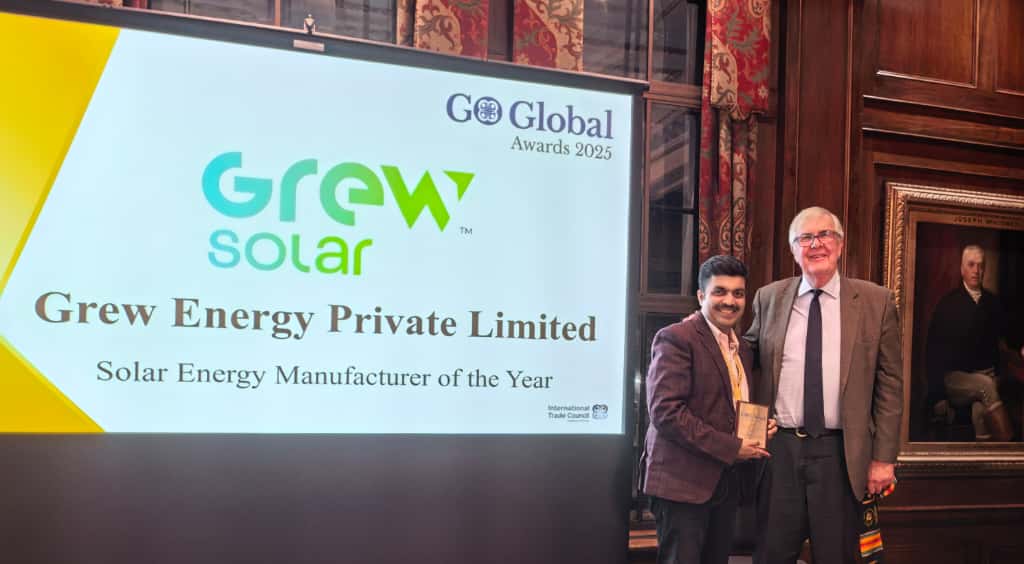
A Milestone for Indian Solar Manufacturing: GREW Solar Wins ‘Solar Manufacturer of the Year’ at the Go Global Awards 2025

India’s renewable energy sector is entering a defining decade, and the need for dependable, high-quality solar manufacturing has never been more central. Against this backdrop, GREW Solar receiving the ‘Solar Manufacturer of the Year’ honour at the Go Global Awards 2025 stands out as a meaningful milestone, not only for the organisation but for India’s solar manufacturing ambitions as a whole.


The Go Global Awards, organised annually by the International Trade Council, recognise organisations contributing to progress in areas such as international trade, innovation and sustainable development. With nominations drawn from multiple sectors and regions, the awards offer a broad view of how industries are evolving across global markets. Being acknowledged in this forum places GREW Solar among companies working to advance reliable, future-ready technologies.


The award was presented at the House of Lords, London, by His Excellency Jonathan Marland and Baroness Sandip Verma, in the presence of diplomats and delegates from 76 countries. For GREW Solar, the recognition reflects the same engineering discipline and process-driven approach that defines its manufacturing ecosystem, an approach that has helped demonstrate India’s growing capability and credibility in global solar manufacturing.


India’s Position in Global Solar Manufacturing

Earning this award at a platform known for benchmarking operational excellence across industries is significant. It signals that Indian solar manufacturing is now operating at a standard aligned with global expectations.


For India, where renewable energy independence is a national priority, such recognition reinforces the role domestic manufacturers play in enabling stable supply chains, accelerating project deployment, and driving competitive, high-efficiency technologies. It also sends a clear message to international markets that India is not just scaling solar capacity, it is scaling quality.


GREW Solar’s win contributes to that narrative. It reflects a broader shift in India’s industrial landscape, where engineering-led manufacturing, disciplined processes, and empirical quality control are becoming defining strengths.


What the Award Means for GREW Solar

For GREW Solar, the recognition validates a philosophy built on engineering discipline, scientific understanding, and controlled manufacturing behaviour. Every module that leaves the Dudu, Jaipur facility is the outcome of process repeatability, disciplined testing protocols and a culture where reliability is engineered.


Vinay Thadani, CEO and Director, Grew Energy Private Limited, said, “Being recognised on a global platform like this means a lot to us. It reflects the steady work we have put into building dependable solar solutions and growing our footprint. This award is not just an honor but a reminder of the responsibility we carry as we expand into new markets. Our teams have worked with a clear goal of making clean energy accessible, and this recognition encourages us to keep moving forward with the same focus.”


Dr. Sachin Verma, Vice President – HR & Business Transformation, Director’s Office, said, “At GREW Solar, we focus on creating an environment where people feel supported and have the space to grow. This milestone encourages us to keep building a strong and committed team. Being named the Solar Energy Manufacturer of the Year 2025 also shows how our work is being recognised globally, and we are grateful for that.”


This mindset reflects our vision of ‘The Future Comes First’, and it guides the way GREW Solar continues Powering the Next chapter of India’s clean-energy transition.


Scaling Capacity: A Roadmap Built for the Future

The award comes at a time when GREW Solar is expanding aggressively across multiple stages of the PV value chain. With module capacity already operational in Jaipur and advanced plans underway for both module and cell manufacturing, the company is strengthening India’s domestic ecosystem through deeper backward integration and long-term capacity creation.


This expansion fortifies supply resilience, supports project developers with consistent product availability, and aligns with national priorities under India’s renewable energy mission.


As demand for reliable, high-performance solar modules continues to rise, GREW Solar’s scale-up ensures India has the manufacturing depth to meet both domestic and export requirements.


A Step Toward the Global Arena

While India remains the anchor, GREW Solar is steadily preparing for its next strategic move which is establishing a meaningful presence in the North American solar market.


The region is entering a phase of profound renewable energy expansion, supported by policy frameworks, demand for trusted suppliers and a renewed emphasis on quality-first procurement. With globally benchmarked quality processes, advanced testing infrastructure, and expanding production capacity, GREW Solar is well-positioned to serve this demand.


This emerging global footprint reinforces a simple idea that engineering excellence built in India can deliver value anywhere in the world. As markets diversify their supplier networks, India’s presence becomes even more important.


A Responsibility That Shapes the Road Ahead

Awards are acknowledgements, but they are also responsibilities. For GREW Solar, this recognition from the Go Global Awards strengthens the commitment to advancing scientific and engineering depth, building consistently reliable manufacturing systems, scaling capacity without compromising quality, contributing to India’s renewable energy goals, and expanding responsibly into global markets.


As India accelerates toward clean-energy independence, the role of trusted solar manufacturers becomes central to national progress. GREW Solar aims to meet that responsibility with discipline, clarity of purpose and a long-term approach rooted in engineering excellence.


This win at the Go Global Awards 2025 is a marker of how far the journey has come and a reminder of the work that will continue as GREW Solar keeps Powering the Next phase of India’s solar future.

Categories
Uncategorized

GREW Solar at REI Expo 2025: A Defining Showcase of Innovation and Leadership

The Renewable Energy India (REI) Expo 2025 once again brought together India’s most influential voices in clean energy from policy makers and EPC developers to manufacturers shaping the future of solar. For GREW Solar, this year’s participation marked another milestone and a clear statement of purpose of strengthening India’s solar manufacturing ecosystem through technology, integration, and innovation.

The G12R Solar PV Module Launch

The momentum began even before the REI Expo opened its doors. On October 29, 2025, GREW Solar unveiled its next-generation G12R Solar PV Module at the Taj Mahal Hotel, New Delhi in an exclusive media roundtable attended by more than 30 leading publications and industry journalists.


The launch was graced by Dr. Mohammad Rihan, Director General of the National Institute of Solar Energy (NISE), as Chief Guest, alongside Mr. Brijmohan Chiripal, MD and Promoter at Chiripal Group, and Mr. Hardip Singh, COO of GREW Solar.


With a remarkable 23.51% module efficiency, the G12R solar PV module reflects GREW Solar’s commitment to advancing module design that endures over decades of performance. The event sparked engaging discussions around India’s renewable capacity, technology localization, and the manufacturing excellence driving GREW Solar’s growth.


The newly launched G12R solar PV module was then showcased at REI Expo 2025 in Greater Noida along with the M10 solar PV module and the All-Black solar PV module, marking its first public industry display and attracting interest from developers, EPCs, and distributors across India.


GREW Solar in Key REI Conferences

Beyond the booth, GREW Solar’s leadership took center stage in two of the Expo’s most anticipated sessions.


At the panel discussion powered by TERI, Mr. Ankur Baranwal, National Sales Head – KAM of GREW Solar, shared his insights on “Accelerating Clean Tech Manufacturing in India.” His address emphasized the urgent need for scalable domestic manufacturing and how companies like GREW Solar are enabling self-reliance through integrated production and advanced R&D.


Mr. Hardip Singh, COO of GREW Solar, participated in the CEO Conclave and the Wood Mackenzie–powered panel discussion on “Can India Redefine Solar Manufacturing Globally?” Here, he spoke about the crucial role of technology partnerships, government policy alignment, and long-term infrastructure investments in positioning India as a competitive global manufacturing hub for next-generation solar technologies.


Together, these discussions highlighted GREW Solar’s growing voice in shaping India’s clean energy roadmap, bridging innovation with policy and market execution.


G12R Solar PV Module at REI 2025

Unveiled to the wider industry for the first time, the G12R High-Power Series drew remarkable attention throughout the three-day Expo. Visitors experienced firsthand the module’s engineering precision with output up to 635 Wp, a larger cell format, and optimized design delivering higher yield per megawatt.


Industry professionals expressed keen interest in the G12R’s reduced module count requirement per MW and its impact on BOS (Balance of System) savings, critical to project economics for utility-scale installations. Many developers and EPC partners engaged with GREW Solar’s team to explore collaborations and potential deployment opportunities.


Across the Expo, GREW Solar’s booth became a hub of active conversations around product innovation, domestic capacity building, and the evolving expectations of India’s renewable market.


Advancing India’s Manufacturing Ambition

GREW Solar’s participation at REI 2025 was not just limited to product display, it was also about reaffirming a long-term vision. As one of only eleven companies selected under India’s PLI (Production Linked Incentive) scheme for a 2.0 GW allocation across PV modules, cells, and wafers/ingots, GREW Solar continues to build the foundation for India’s self-reliant solar ecosystem.


Backed by the Chiripal Group’s 52+ years of manufacturing legacy, GREW Solar has quickly evolved into one of India’s youngest and fastest-growing solar manufacturers. With state-of-the-art reliability testing and a three-stage backward integration expansion plan, the company is setting the pace for advanced solar manufacturing that aligns with India’s clean energy ambitions.


Powering the Road Ahead

From unveiling the G12R solar PV module in New Delhi to engaging industry stakeholders at REI 2025, GREW Solar demonstrated what progress looks like with innovation backed by scale, vision grounded in execution, and technology built for the future.


As conversations continue with developers, EPCs, and distribution partners, GREW Solar remains focused on expanding its product ecosystem and advancing India’s leadership in solar module manufacturing.


The debut of the G12R solar PV module marks a turning point in how India’s solar future is being built proudly “Made in India.”


To explore the G12R solar PV module or discuss collaboration opportunities, connect with us at info@thegrewsolar.com

Categories
Uncategorized

TOPCon Solar Panels Explained: Technology, Benefits, and the Future of High-Efficiency Solar Energy

The world of solar energy is evolving at a fast pace. And in this, TOPCON solar panels are a league apart. They are not only revolutionalizing solar generation but also taking efficiency and durability to the next level. Let’s explore how they’re made, how they work and their key benefits.


What is a TOPCON Solar Panel?


A TOPCON (Tunnel Oxide Passivated Contact) solar panel is a type of high- efficiency photovoltaic (PV) module. It uses advanced technology to enhance energy generation. Unlike conventional solar panels, TOPCON panels have a unique design with a passivated rear contact layer. This innovation allows for:

  • Greater efficiency
  • More light absorption
  • Reduced energy loss

By perfecting materials and technology, TOPCON panels are becoming the preferred choice for businesses, large-scale energy projects, and homeowners.

What Is TOPCON Solar Panel Technology?


These panels are built with advanced technology, starting from the materials used and extending to the manufacturing process. Let’s break down the mechanics behind their construction:

  1. The Cell Structure

The main difference in the structure lies in the rear contact design. Typically, solar panels have metal contacts on the front and back to collect and transmit electricity.

In TOPCON panels, the back of the solar cell is equipped with a layer of tunnel oxide passivation. This improves the electrical performance of the panel by reducing recombination losses. This means more sunlight is converted into usable electricity.

  1. Efficiency gain: TOPCON panels can reach efficiencies of up to 23.5%, whereas traditional panels, including Mono PERC panels, typically achieve around 21.29%.
  2. Innovative Passivation Layer

The tunnel oxide passivation layer reduces the surface recombination. By minimizing the energy loss, this layer efficiently helps in converting sunlight to electricity.

  • Passivation effect: Studies show that the tunnel oxide passivation can reduce recombination losses, leading to better energy conversion and higher output.
  1. Lower Degradation Rate

The slightly lower degradation rate makes a significant difference in the long run.

  1. Degradation Difference: Industry estimates suggest TOPCON degrades at around 0.4% per year, while PERC cells may degrade 0.55% annually. Over the 25-30 year lifespan of a solar panel, this can result in a notable difference in total energy output favoring TOPCON.
  2. Advanced Manufacturing Techniques

TOPCON panels are made with advanced manufacturing techniques, including precise material deposition, high-temperature treatments, and strict quality control. These methods ensure the panels are highly efficient and durable.


The Advantages of TOPCON Solar Panels


Despite the drawbacks, TOPCON panels offer several benefits that reveal their immense potential:

  1.  Higher Efficiency

Due to their unique design and passivation technology, these panels convert more sunlight into electricity. This is ideal for projects with limited space or a need for maximum energy output.

  1. Efficiency stats: TOPCON panels can reach efficiencies of up to 23.5%, whereas traditional panels, including Mono PERC panels, typically achieve 21.29%.
  2. Better Performance in Low Lights

TOPCON panels perform better in low-light conditions than traditional panels. This makes them ideal for low sunlight areas or regions with more overcast days.

  1. Low-light performance: During cloudy days or dusk, TOPCON cells are able to maintain higher power output. Their power output is about 5.4% higher than that of PERC cells.
  2.  Sustainability and Environmental Impact


TOPCON panels are more efficient and lead to lower energy losses. So, they help in reducing overall carbon footprint. Also, since they last longer, it means less waste is produced from manufacturing new panels.


Comparing TOPCON Solar Panels to Other PV Module Types


The solar market offers various types of PV panels, each with pros and cons. Here’s how TOPCON panels compare:

  • TOPCON panels outperform other solar module types in energy production and low-light performance.
  • They are more efficient. They extract more energy from the same amount of sunlight.
  • Their lifespan is longer than other PV module types, with minimal degradation over time.

So, TOPCON panels offer better energy efficiency, longer lifespan, and higher performance in various conditions.


What Does the Future Hold for TOPCON Solar Panels?


The demand for solar energy is growing as each day passes. These panels have the potential to shape the future of clean energy. Since they are efficient and sustainable, they are a strong contender for both large-scale and residential installations.


Will the cost of TOPCON panels decrease?


Yes, they are likely to become more affordable. The technology is bound to improve and the production will become more efficient with time.

Can TOPCON technology be adopted in other solar products?


Yes, TOPCON technology can be applied to other solar module types, leading to more efficiency and reliability. It can be adopted in solar-powered vehicles, solar trackers, and agrivoltaics.


Conclusion


TOPCON technology is a major leap in the solar world. This advanced passivation technology makes them more efficient, durable, and reliable than traditional panels. While production costs and material availability can be challenges, the benefits outweigh these issues.


As more solar panel manufacturers embrace this technology, we can expect a significant shift in the solar energy landscape. With increasing demand for renewable energy, these panels are the stepping stones to a greener future. The future of solar power is bright, and TOPCON solar panels are leading the way.

Categories
Uncategorized

RE+ 2025: A Milestone Achievement for GREW Solar

The energy that filled the Las Vegas Convention Centre from September 9–11, 2025, during RE+ 2025 was truly remarkable. As North America’s premier renewable energy exhibition concluded, we at GREW Solar reflect on three transformative days that reinforced our position as a leading solar PV manufacturer and opened new avenues for global collaboration. These moments stand out as the true RE+ 2025 solar highlights.


Outstanding Industry Response at Booth V13940

Our presence at Booth V13940 on Venetian Level 2 exceeded expectations. The response from industry professionals, project developers, EPCs, and renewable energy stakeholders was overwhelming. Throughout the three-day exhibition, our booth remained a hub of meaningful conversations, strategic discussions, and partnership explorations.


The diversity of visitors who engaged with our team demonstrated the growing recognition of GREW Solar’s manufacturing excellence and our commitment to serving the North American market. From utility-scale developers seeking reliable module partners to residential solar installers exploring premium solutions, the diversity of interactions validated our comprehensive product approach.


Product Portfolio Reception

All-Black Premium Solar Modules: Residential Market Enthusiasm


The introduction of our All-Black premium solar modules created considerable excitement in the residential solar segment. Installers and distributors appreciated the combination of up to 440 Wp output with sophisticated aesthetics that complement American architectural styles.


The enhanced shade tolerance and class-leading durability features addressed key concerns from residential solar installers, who prioritize long-term performance and customer satisfaction. Several distribution partnerships were initiated based on the positive reception of this product line.


G12R High-Power Series: Economic Impact Recognition

Our G12R High-Power Series generated significant attention among utility and commercial project stakeholders. Delivering up to 635Wp while reducing total module count by 6–8% per MW created immediate interest from cost-conscious developers.


Multiple project managers calculated the potential savings from requiring only 160,000 G12R modules versus 172,414 standard modules for a typical 100MW installation. The reduced BOS costs and installation time savings became compelling talking points throughout our demonstrations.


G2G N-Type TOPCon Series: Market Validation

The response to our G2G N-Type TOPCon Solar Module series was exceptional. Professionals highlighted its 590 Wp output, 22.84% efficiency, and superior -0.29%/°C temperature coefficient, making it well suited to America’s diverse climates.


Utility-scale developers also valued its extended generation, with up to two extra hours of production at dawn and dusk, addressing the critical need to maximize energy yield.


Supply Chain Confidence: UFLPA-Compliant Manufacturing

As supply chain traceability becomes a decisive factor in U.S. solar projects, GREW Solar’s UFLPA compliant modules and transparent, ethical solar manufacturing attracted major interest. Developers and EPC partners engaged deeply with our documentation processes, affirming trust in our supply chain standards.


Quality Assurance Recognition

Industry professionals showed considerable interest in our quality assurance infrastructure. Our state-of-the-art R&D and Reliability Lab, capable of performing 25+ types of IEC tests, impressed technical teams and quality managers.


The rigorous validation process covering Environmental Chambers, UV testing, Hi-Pot & IR testing, and hail impact testing resonated with stakeholders who prioritize long-term module performance and reliability.


Strategic Partnerships and Market Opportunities

RE+ 2025 facilitated numerous strategic discussions with potential partners across the renewable energy value chain. From module distribution agreements to utility-scale supply partnerships, the exhibition opened multiple avenues for market expansion.


Several engineering firms expressed interest in collaborating on custom module specifications for specific project requirements. These technical partnerships align perfectly with our manufacturing capabilities and commitment to meeting diverse market needs.


Industry Insights and Market Intelligence

Beyond showcasing our products, RE+ 2025 offered valuable insights into North American trends:

  • Supply chain transparency and domestic content requirements are creating strong opportunities for compliant manufacturers like GREW Solar.
  • Utility-scale projects now prioritize efficiency and reliability over lowest-cost modules, aligning with our quality-first approach.
  • Residential markets are demanding aesthetically pleasing yet powerful solutions, validating our Premium All-Black Series

“Made in India, For America” Philosophy


Throughout the exhibition, our “Made in India, For America” philosophy received strong recognition. This approach, combining Indian manufacturing excellence with American market requirements, resonated with developers seeking reliable, cost-effective solutions.


Our commitment to serving the North American market while leveraging manufacturing expertise created a compelling value proposition that differentiated us from other international manufacturers.


Future Commitments and Growth Trajectory

With partnerships initiated at RE+ 2025, GREW Solar is accelerating its North American market focus. Our upcoming 11.0 GW PV module and 8.0 GW PV cell capacity expansion by 2026 will further support the region’s demand for utility-scale solar developers, EPC partners, and residential solar installers.


The market response validated our three-stage backward integration approach and confirmed demand for our expanding product portfolio.


Based on the partnerships initiated and market intelligence gathered, we are accelerating our North American market development plans while maintaining our commitment to quality and reliability.


Conclusion: Momentum for the Future

GREW Solar at RE+ 2025 marked a defining moment in our North American journey. The strong product reception, meaningful partnerships, and valuable insights gained serve as the foundation for our continued growth.


As we return to our manufacturing facilities with renewed energy, our focus remains on delivering quality, reliability, and innovation that North American renewable energy projects demand.


The future of solar energy is being built today, and GREW Solar is proud to contribute to that story with our comprehensive product portfolio, manufacturing excellence, and unwavering commitment to powering the next generation of clean energy solutions.


For partnership opportunities and product inquiries, contact us at sohil.b@grew.one

Categories
Uncategorized

GREW Solar at RE+ 2025: Powering Conversations, Showcasing What’s Next

Every year, RE+ brings together the world’s clean energy leaders, innovators, and change makers in North America. As the largest gathering of its kind, it is a place where the future of renewable energy takes shape. From new technologies and manufacturing breakthroughs to the latest policy shifts and market trends, RE+ will set the tone for what’s next in clean energy worldwide.


This year, the exhibition is in Las Vegas, Nevada, and GREW Solar is proud to be part of the momentum once again.


GREW Solar at RE+ 2025


We are excited to announce our participation at RE+ 2025. For us, this event is about showcasing products but also about engaging in conversations that shape the direction of renewable energy globally. RE+ provides the perfect platform to demonstrate our capabilities, learn from global peers, and reinforce GREW Solar’s role as a reliable, future-ready manufacturing partner for the world.

Backed by the Chiripal Group’s 52+ years of manufacturing legacy and global trade relations spanning over 50 countries, GREW Solar stands as one of India’s leading solar PV manufacturers. As one of only 11 trusted companies to win PLI allocation of 2.0GW capacity for PV Modules, PV Cells, Wafers/Ingot manufacturing, we are setting industry benchmarks as India’s youngest and fastest-growing solar PV module manufacturer.


What We’re Looking Forward To


Every edition of RE+ offers new opportunities. This year, we look forward to:

  • Networking with global industry leaders, policymakers, and innovators who are driving the clean energy transformation.
  • Learning from the latest insights into the North American solar market and its unique dynamics.
  • Showcasing our comprehensive product portfolio including the G2G N-Type TOPCon Series, G12R High-Power Series, and our Premium All-Black Series – each engineered to meet specific market demands from utility-scale to residential applications.
  • Demonstrating our UFLPA-compliant manufacturing processes and transparent supply chain designed specifically for the North American market.


The North American Solar Market: A Catalyst for Global Growth


North America continues to stand as one of the fastest growing and most influential clean energy markets. With supportive policies, a growing emphasis on decarbonization, and increasing demand for reliable solar solutions, the region is setting benchmarks that resonate globally.


For GREW Solar, the North American market represents both an opportunity and a responsibility. With our “Made in India, For America” philosophy and state-of-the-art manufacturing capabilities, we are supporting the region’s ambitious renewable energy goals while demonstrating the strength and trustworthiness of Indian manufacturing on a global stage.


GREW Solar’s Innovation Portfolio


Founded in 2022, GREW Solar has achieved unprecedented growth through strategic three-stage backward integration within just 2 years of establishment. With an ambitious target of 11.0 GW PV module manufacturing and 8.0 GW PV cell manufacturing capacity by 2026, we are steadily building capacity and expertise that will serve the world’s clean energy transition.

Our manufacturing excellence is anchored by comprehensive quality assurance infrastructure, including a state-of-the-art R&D and Reliability Lab equipped to perform 25 types of IEC tests. From Environmental Chambers and UV testing to Hi-Pot & IR testing and Hail impact testing, every module undergoes rigorous validation to ensure long-term performance.


G2G N-Type TOPCon Series: Breakthrough Performance


Our G2G Series represents next-generation solar engineering where advanced cell architecture meets proven manufacturing excellence. With peak power up to 590Wp and module efficiency up to 22.84%, these modules deliver extended power generation with up to 2 additional hours of energy production daily during dawn and dusk. The superior -0.29% per °C temperature coefficient ensures optimal performance in America’s varied climate conditions.

G12R High-Power Series: Economic Revolution


When utility projects demand peak power with minimal complications, our G12R Series delivers unprecedented output up to 635Wp. These super-modules reduce total module count by 6-8% per MW, with a typical 100MW installation requiring approximately 160,000 G12R modules versus 172,414 standard modules leading to significant BOS cost savings and weeks of reduced installation time.


Premium All-Black Series: Residential Perfection


This year, we are also bringing something new. Our Premium All-Black Series proves that solar shouldn’t be a compromise between aesthetics and performance. With up to 440Wp output in a sophisticated all-black design that complements American architectural styles, these modules feature enhanced shade tolerance and class-leading durability for decades of worry-free operation.


Event Details & Invitation


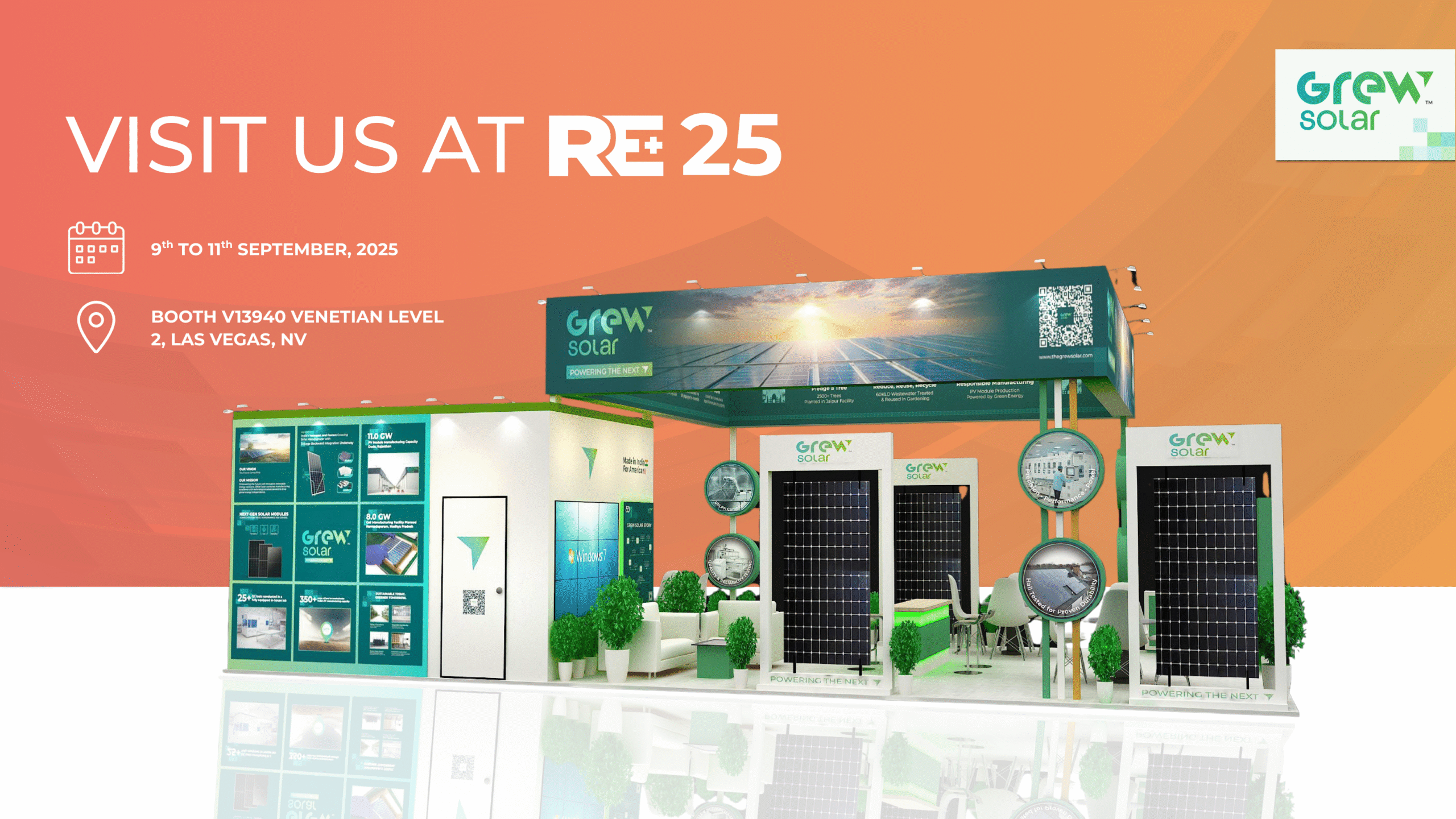
RE+ 2025 takes place from September 9-11, 2025 in Las Vegas, NV.


You can find GREW Solar at Booth V13940, Venetian Level 2.


We invite you to visit our booth, connect with our team, and explore how GREW Solar is setting new benchmarks in solar module manufacturing. Whether you’re seeking reliable module partners for utility-scale projects, exploring the future of residential solar with our Premium All-Black Series, or simply looking to connect with a fast-growing clean energy manufacturer backed by 52+ years of Chiripal Group legacy, our team will be there to engage.


Conclusion: Powering the Next


As GREW Solar prepares for RE+ 2025, our focus is on scale, reliability, and building solutions that last. From strengthening our manufacturing base to introducing our complete product ecosystem – G2G TOPCon Series, G12R High-Power modules, and Premium All-Black residential solutions, every step we take is about delivering value at a global level.

With our “Made in India, For America” approach, UFLPA-compliant supply chain, and end-to-end quality control from cells to modules, we’re not just manufacturing solar panels – we’re engineering energy revolutions that transform how America captures and utilizes solar energy.


This year, we’re bringing that progress to Las Vegas, and we look forward to engaging with the industry on what comes next.


Visit us at Booth V13940, Venetian Level 2 at RE+ 2025.


Book your appointment at sohil.b@grew.one

Categories
Uncategorized

The Future Comes First: GREW Solar’s Story of Growth and Scale

The global shift to clean energy is increasing, but its success depends on the ability to manufacture solar modules at a massive scale while maintaining quality and sustainability. As demand for solar energy grows worldwide, the need for reliable, high-volume production becomes important.


India has quickly become one of the world’s top five most promising manufacturing hub, combining industrial capacity with engineering expertise to fulfill the renewable energy goals. One of the companies leading this transformation in India is GREW Solar, a company that has built its foundation on responsible growth, smart innovation, and sustainable manufacturing practices.


Where the Journey Began


GREW Solar was founded in 2022 under the established industrial legacy of the Chiripal Group. From day one, the company entered the market with a clear mission, to build a manufacturing system that could meet today’s demand while preparing for tomorrow’s opportunities. The vision was to deliver high-performance solar modules using the manufacturing processes that make sustainability a priority throughout operations.


The company’s manufacturing facility in Dudu, Rajasthan, became the foundation for this vision. Equipped with advanced automation, strict quality control systems, and a skilled workforce, the Dudu facility is the cornerstone of the company’s operations.


Scaling Without Compromise


In just a few years, GREW Solar has planned to strategically expand its manufacturing footprint to multiple strategic locations across India. This expansion has been carefully planned to maintain the standards established.


By 2026, GREW Solar will have 11.0 GW PV module manufacturing capacity and 8.0 GW PV cell manufacturing capacity. This level of scale will provide greater supply reliability, better cost efficiency, and more competitive product delivery for domestic and international markets.


However, this growth at GREW Solar has never come at the expense of quality or environmental responsibility. The Dudu plant has been designed with complete process control in mind, allowing greater overview of every production stage. The company’s plans to establish PV cell manufacturing facilities represent a move toward vertical integration, a step that will improve quality consistency, delivery times, and supply chain strength in the market.


This approach reflects a fundamental understanding that in the solar industry, reliability matters as much as capacity. Customers prefer suppliers who can deliver consistent quality at volume, and GREW Solar has structured its growth to meet this demand.


The GREW Solar Manufacturing Edge


What sets GREW Solar apart is how it produces its products. The production lines use the latest automation technologies to reduce variation and human error. This includes precision cell stringing, laser-based cell cutting, automated lamination systems, and AI-enabled inspection tools that catch defects before they become problems.


Each module passes 25+ rigorous tests for quality and reliability.This includes electroluminescence scans to detect hidden defects and environmental simulations that replicate extreme conditions such as high winds, heavy snow, intense heat, and humidity. By simulating decades of wear & tear conditions in a controlled laboratory, the company ensures that every module is built for lasting performance in real-world applications.


The manufacturing facilities are of international standards. This global compliance opens international opportunities and also builds confidence among customers who demand consistency and reliability from their solar module suppliers.


The Future Comes First


At GREW Solar, “The Future Comes First” serves as a vision statement and a principle for making decisions. Every expansion plan, technology investment, and sustainability initiative is evaluated based on what the market, the planet, and the industry will need in the coming years.


Our manufacturing facilities use solar panels to reduce dependence on fossil fuels. Water recycling systems minimize waste, while comprehensive waste management protocols ensure waste does not end up in landfills. The production process itself is optimized to reduce energy consumption, lowering the carbon footprint of each module produced. Other than operations, our commitment to sustainability extends to restoring green cover through initiatives like “Pledge a Tree” initiatives. Under this initiative, we have already planted 2,500+ saplings, reinforcing our vision of sustainability that goes beyond manufacturing.


By making sustainability central to manufacturing operations, GREW Solar proves that scale and environmental responsibility can grow together. Building bigger manufacturing capacity simply requires smarter planning and better execution.


Shaping the Ecosystem


GREW Solar’s manufacturing growth contributes to strengthening India’s entire solar value chain. By expanding PV cell and module production capacity domestically, the company supports India’s goal to reduce import dependence, stabilize supply chains, and establish the country as a global leader in renewable energy manufacturing.


The company’s vertical integration plan will also create a more resilient manufacturing ecosystem. By controlling upstream processes, GREW Solar will be able to reduce supply disruptions and ensure consistent quality and advantages that benefit all the stakeholders throughout the solar industry.


People, Process & Performance


While scale and technology are central to GREW Solar’s success, people remain the most valuable asset. The company invests in building workforce capabilities, from training production operators in advanced manufacturing techniques to developing leadership skills among supervisory staff.


This focus on people ensures that as infrastructure scales, operational discipline and quality culture scale alongside it. Every module represents the result of coordinated effort between skilled professionals and precision processes.


The emphasis on workforce development also creates opportunities for career growth and skill building that benefit the broader manufacturing sector. As GREW Solar expands, it contributes to building the human capital that India needs to become a global manufacturing leader.


Powering the Next


GREW Solar’s rapid growth demonstrates the strength of its vision and the execution capability behind it. The company is building manufacturing capacity while building trust in Indian manufacturing, proving that India can lead in delivering sustainable, high-quality solar modules at global scale.


As GREW Solar looks ahead, its commitment to continue Powering the Next remains clear. This means enabling the next phase of sustainable industrial growth, setting new standards in manufacturing excellence, and advancing the world’s transition to renewable power through reliable, high-quality solar technology.


Carrying this vision forward, GREW Solar will be showcasing its latest solar technology at the upcoming RE+ and REI expos, platforms that bring together the global renewable energy industry.