Categories
solar home Grew Solar

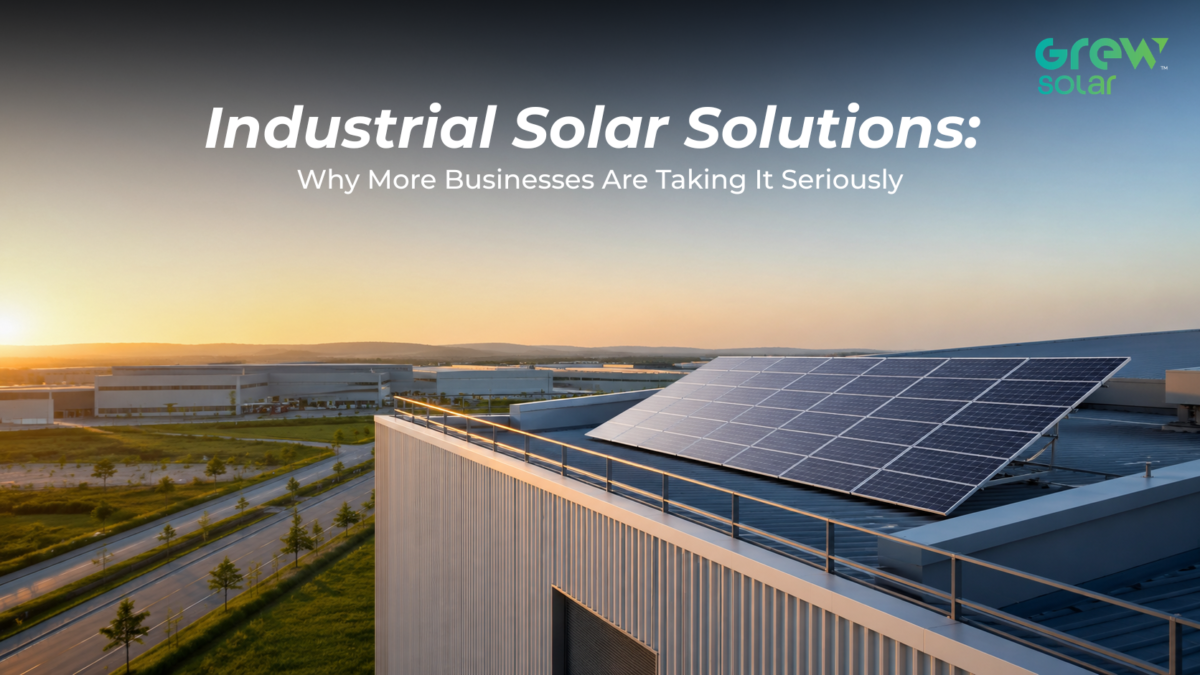
Industrial Solar Solutions: Why More Businesses Are Taking It Seriously

For a long time, energy was just another line item in operational costs. Something you paid for and moved on.

That approach is slowly changing.

With electricity prices becoming less predictable and consumption steadily increasing, many businesses are now looking at energy a bit differently, not just as a cost, but something that can be managed better.

This is where industrial solar solutions are starting to come into the picture more often.

Not Just an Alternative Anymore

Earlier, solar was often seen as an optional upgrade. Something companies would consider later.

Now, it’s becoming part of the conversation much earlier.

The reason is fairly simple. When a business runs on large-scale operations, even small changes in energy cost can have a noticeable impact over time. And relying entirely on external power doesn’t always give that level of control.

Solar doesn’t solve everything overnight, but it does shift some of that control back to the business.

What “Industrial Solar” Actually Means in Practice

At a basic level, it’s about generating electricity at your own facility using solar panels.

But in practice, it’s not just about installing panels on a roof.

A system has to be planned around:

  • how much energy you use
  • when you use it
  • how your operations might grow in the future

If these things are not considered properly, the system might still work, just not as efficiently as it could.

Why Location Still Matters

One thing that works in favor of businesses across regions like Gujarat, Rajasthan, Maharashtra, and Delhi is the availability of sunlight.

These areas generally receive good solar exposure for most of the year, which makes it easier for systems to generate consistent output.

That said, sunlight alone doesn’t guarantee performance. The way the system is designed still plays a big role.

Where the Real Difference Comes In

Two setups can look similar on paper but perform quite differently over time.

Usually, the gap comes from a few things that are not always visible upfront.

Design decisions, for example, can affect how much sunlight is actually captured.
Material quality influences how the panels handle heat and wear over the years.
And installation, even small errors here can quietly reduce efficiency.

These are not issues that show up immediately, which is why they’re easy to overlook at the beginning.

The Role of Manufacturing (Often Underrated)

A lot of attention goes to installation, but manufacturing quality matters just as much.

Solar panels are expected to last 20 to 25 years. Over that period, even minor inconsistencies can affect output.

Better manufacturing usually means:

  • more uniform performance
  • slower degradation
  • fewer unexpected issues later

It’s not something you notice on day one, but it becomes clear over time.

A Quick Note on GREW Solar

GREW Solar has been expanding its manufacturing capabilities with this long-term view in mind.

With an operational module manufacturing facility in Rajasthan and plans to scale further, the focus is on maintaining consistency in production while supporting larger industrial requirements.

Their use of technologies like N-type TOPCon modules is aimed at improving efficiency, but equally important is the emphasis on process control and quality checks behind the scenes.

Looking Beyond Immediate Savings

Cost savings are usually the starting point for most businesses considering solar.

But over time, the conversation tends to shift.

It becomes less about “how much are we saving this month” and more about:

  • how stable our energy costs are
  • how much control we have
  • how reliable the system is over the years

That’s where well-planned industrial solar systems tend to stand out.

So, Is It the Right Move?

There isn’t a single answer that fits every business.

But for operations with high and consistent energy usage, solar is increasingly becoming a practical option rather than just an alternative.

Not because it’s trending, but because, in many cases, it makes operational sense.

Industrial solar solutions don’t change everything overnight. But they do change how businesses approach energy.

And in a space where costs, efficiency, and long-term planning matter, that shift is becoming more relevant than ever.
Categories
solar home

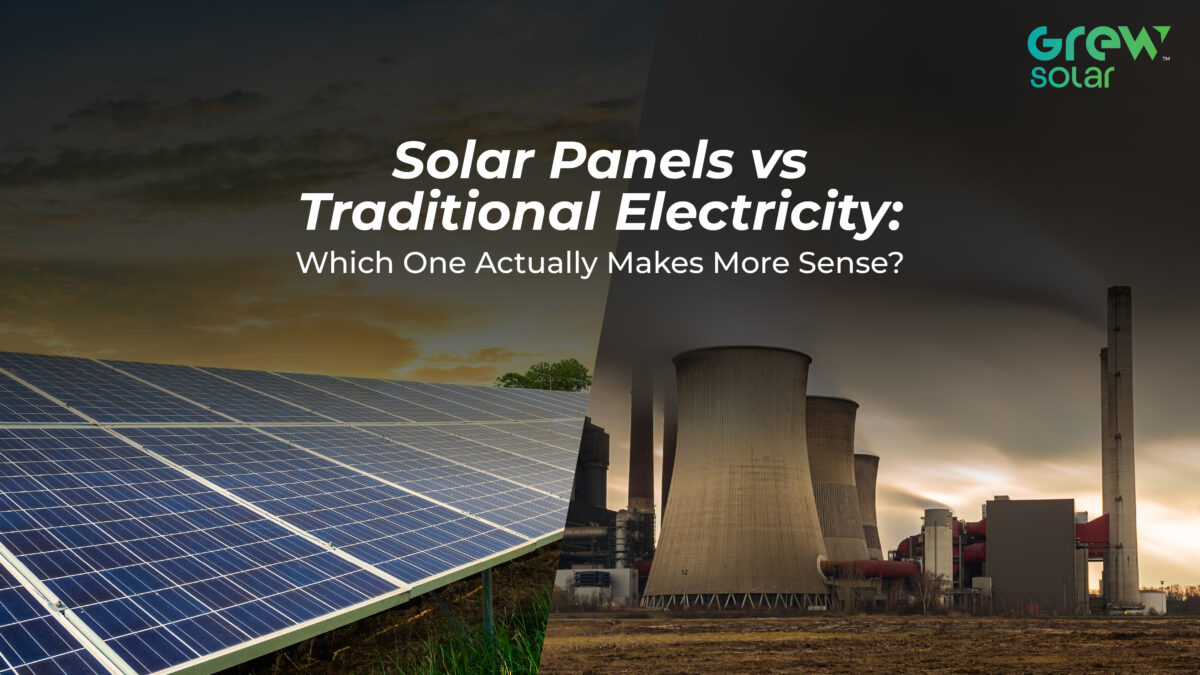
Solar Panels vs Traditional Electricity: Which One Actually Makes More Sense?

Electricity has long been a constant in everyday use. It powers everything we rely on, and for the most part, people haven’t had to think much about where it comes from or how it is priced. That model still holds, but rising tariffs and changing energy needs are now making people take a closer look at their options.

Solar energy has become one of the most considered alternatives in this shift. The comparison today is not just about access to power, but about how energy is generated, how it is managed, and how it holds up over time.

Understanding Traditional Electricity Generation 

Electricity has traditionally been generated at centralized power plants and then transmitted over long distances before reaching end users. This system has supported energy demand for decades and continues to play an essential role.

At the same time, the way it is priced is influenced by factors outside the user’s control. Tariffs tend to increase over time, and changes in fuel costs or supply conditions can affect overall pricing. This makes it difficult to plan energy costs with certainty over the long term.

While the supply itself is generally reliable, the cost of that supply is not always as stable.

How Solar Works Differently

Solar changes how energy is generated and used. Instead of depending entirely on external supply, electricity is produced closer to where it is consumed.

Solar energy also reduces reliance on the grid and introduces a level of control over energy generation. In the regions with strong and consistent sunlight, solar becomes a practical and scalable option for different types of energy needs and usage.

The shift is also structural in nature since here, energy moves from being entirely supplied to being partially self-generated. 

Cost in a Longer-Term View

One of the key differences between solar and traditional electricity is the cost is viewed over time.

Traditional electricity generation does not need upfront investment, but tariffs increase gradually which leads to rising energy expenses over the years.


When it comes to generating electricity with solar, it involves an initial investment, but once the installation is finished, it offers a stable cost structure. Over time, this allows for better visibility and control over energy-related expenses.

The comparison here is not limited to immediate or initial costs but also they evolve over time.

Performance and Efficiency

Energy performance depends on how efficiently power is generated and delivered.

With traditional electricity, some energy loss is experienced during transmission but solar systems generate power closer to the point of use which reduces these losses.

Modern solar modules are designed to operate under a range of conditions, including high temperatures and partial shading. However, performance is closely linked to system design and execution. Well-planned systems deliver consistent output, while gaps in design or installation can affect performance.

Environmental Considerations

Energy decisions are directly related  to environmental impact. Traditional electricity generation involves emissions and resource use, which are now being looked at and reviewed more closely than before.

Solar offers a cleaner alternative, as it relies on renewable energy without direct emissions. This makes it relevant not only from a cost perspective, but also from a long-term sustainability standpoint. 

Why System Quality Matters

Solar performance is affected by a variety of factors besides installation such as module quality, manufacturing consistency, system design, and execution.

Even well-designed systems will underperform if there are inconsistencies in production or gaps in implementation. This is why choosing the right solar panel company is very important. 

A solar company’s manufacturing standards, testing processes, and system planning all play a role in how reliably a system performs over time.

GREW Solar: The Most Trusted Solar Manufacturer 

GREW Solar is one of the youngest-and-fastest manufacturing companies that is known for its manufacturing quality and performance consistency across its solar PV module portfolio. With a roadmap of 11.0 GW of PV module manufacturing capacity and 8.0 GW in PV cell manufacturing capacity in 2026, the company is building scale alongside systems to support solar supply, and strengthen domestic solar manufacturing.

The G12R and M10R solar PV modules are ALMM-certified and have been developed with a focus on efficiency and long-term performance, supported by in-house testing and process control.

The Future of Energy 

The way energy is produced and used is gradually evolving. Traditional electricity will continue to remain an important part of the system, but there is a clear shift toward solutions that offer greater control and long-term stability.

Solar is becoming a part of this shift. It allows energy to be generated closer to where it is used and introduces a more predictable approach to managing energy needs. As adoption increases, the focus is moving beyond cost to include performance, reliability, and sustainability.

The future of energy lies in combining these approaches to create systems that are both stable and adaptable.

Categories
Uncategorized

GREW Solar Launches Landmark Ad-film with Gujarat Titans Cricketers, Declaring ‘The Next Starts Here

The Ad film with Shubman Gill, Sai Sudharsan & Washington Sundar marks GREW Solar’s boldest foray yet into purpose-driven storytelling – positioning clean energy as the fuel behind India’s next generation of champions.

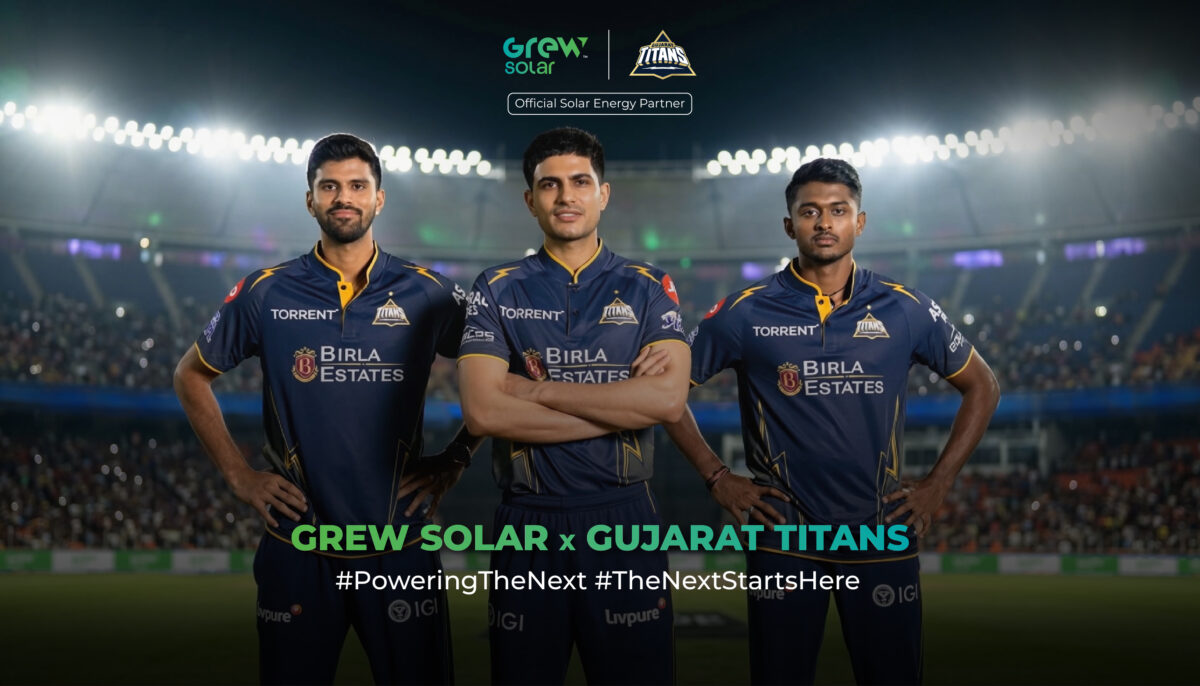
AHMEDABAD / DELHI / MUMBAI, APRIL 20, 2026 — GREW Solar, one of India’s youngest and fastest-growing solar PV module manufacturers and energy venture of the Chiripal Group, has launched its new Ad-film in association with the Gujarat Titans, featuring captain Shubman Gill, star batter Sai Sudharsan, and all-rounder Washington Sundar. Titled ‘The Next Starts Here’ and anchored by the brand endline ‘GREW Solar – Powering the Next’, the Ad-film captures the belief that every leap forward – whether in sport, business, or infrastructure begins with having the right foundation in place. This is the company’s second cricket-led Ad-film in 2026, following its acclaimed TVC campaign with the Royal Challengers Bengaluru Women’s Team, which presented GREW Solar as the sensible growth partner for businesses: “good for the pocket, good for the planet.”

The Ad-film is built on a simple yet powerful truth: progress is shaped by the reliability of what powers it. There was a time when fading daylight dictated how long a young cricketer could train, quietly placing limits on ambition. Today, that constraint no longer exists. Through Shubman Gill, Sai Sudharsan, and Washington Sundar, the film charts a journey from practice sessions to performing under stadium lights – with GREW Solar as the constant, dependable force behind that evolution. This mirrors the role energy plays in real life: not always visible, but always critical. Aspirational in its vision and grounded in lived experience, the film’s message is clear: with the right energy behind you, the next chapter is always within reach. While rooted in cricket, the narrative reflects a larger shift across India – where businesses, institutions, and everyday consumers are increasingly choosing solar to remove the limits on growth and continuity.

“This Ad-film campaign reflects how we see the role of energy having evolved from a background utility to a critical driver of performance on a global platform. Just as elite athletes rely on discipline and consistency, businesses today need power sources they can depend on without compromise. Through this film, we wanted to position solar energy not as an alternative, but as the foundation for reliable, future-ready growth.” Vinay Thadani, CEO & Executive Director, GREW Solar

The campaign is aimed at a new generation of decision-makers from high-growth businesses to infrastructure developers, who view energy reliability as central to performance.

“With The Next Starts Here, we set out to speak to a modern India; young, ambitious, resilient, and deeply aware that sustainable energy isn’t a distant goal, but a present imperative. The Gujarat Titans mirror this very spirit: energetic, driven, and relentlessly forward-looking. This Ad film is our promise that GREW Solar will be there at every step, powering progress and enabling the journey ahead. We are the dreamers and doers” Rosette Soares, Head – Corporate Branding, GREW Solar

The Ad-film launch comes at a defining moment for India’s solar sector. The country added a record 45 GW of solar capacity in FY 2025–26, crossing 150 GW of cumulative installed solar PV capacity with solar now accounting for 55% of India’s total renewable energy mix and the nation ranked third globally in solar PV. This campaign also reflects the broader shift in how India is adopting solar as a primary, performance-led energy choice for enterprises and infrastructure at scale.

As India builds for its next phase of growth, energy reliability is becoming as critical as ambition itself – a shift this campaign seeks to capture. Gujarat, home to both the Gujarat Titans and GREW Solar’s manufacturing roots, was the second-largest contributor to this landmark year with 8,952 MW of new capacity. With two landmark Ad commercials in a single year, GREW Solar is positioning itself at the forefront of India’s clean energy narrative.

The Ad film campaign will be amplified through a high-impact T20 cricket premier league media strategy combining digital-first storytelling, and targeted business media outreach across Instagram, Facebook, LinkedIn, YouTube, and the GREW Solar website.

Categories
Grew Solar

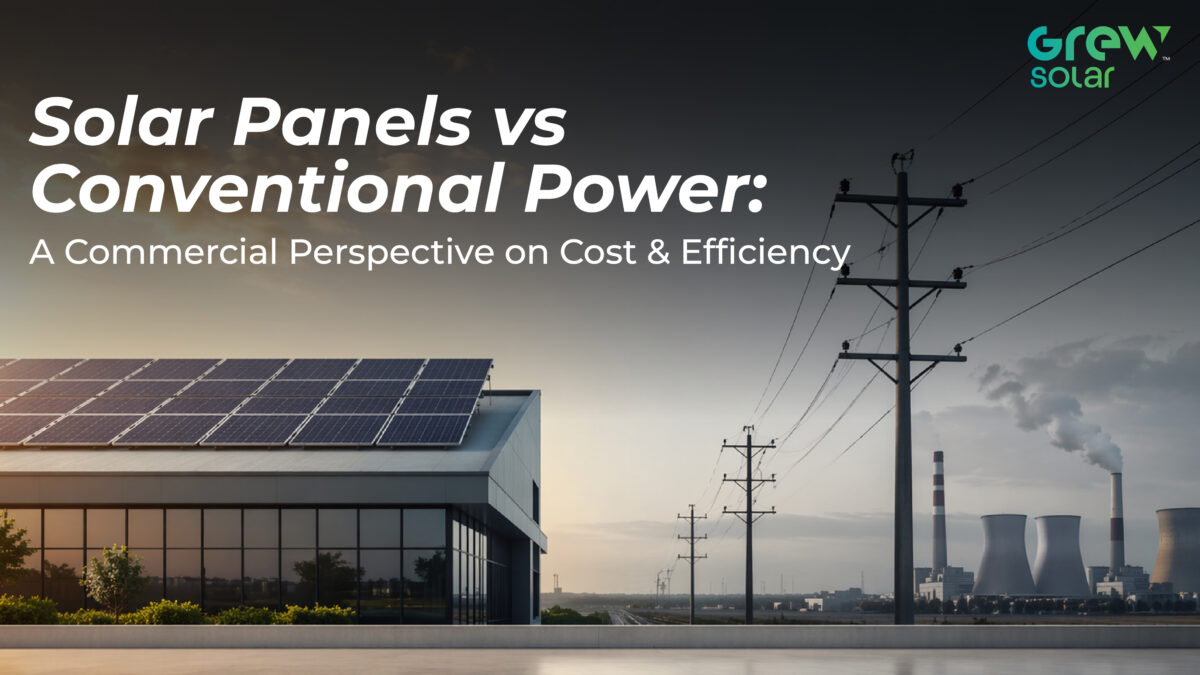
Solar Panels vs Conventional Power: A Commercial Perspective on Cost and Efficiency

Energy costs have become a more visible part of business planning, especially as tariffs continue to fluctuate across regions and sectors. For many organisations, the question is no longer whether to adopt solar, but how it compares with conventional power over time.

This comparison is not only about today’s cost per unit, but also about how energy is sourced, managed, and sustained. The solar panel company chosen here also factors into this decision, as the system’s performance depends on more factors than installation alone.

Understanding Conventional Power Costs

Conventional power is usually seen as a predictable utility expense, but in reality, it is affected by many external factors. Grid tariffs can change over time due to external factors, fuel costs also affect how power generation, and peak demand charges is yet another factor that can make monthly bills less predictable. These changes are not always gradual, which makes long-term planning more difficult.

For large businesses, this means energy costs can be unpredictable. Grid power is still essential, but pricing doesn’t stay stable over time. While grid power remains important, it lacks long-term cost stability.

How Solar Changes the Cost Structure

Solar changes the way a business thinks about energy costs. Instead of being a recurring expense, it becomes a planned investment with a more predictable output. While there is an upfront cost involved, the energy generated over time reduces reliance on grid electricity and helps stabilise overall energy expenditure.

This makes energy easier to plan around since over time costs become more stable, which works well for businesses with a steady demand.

Efficiency and Energy Output Comparison

The comparison between solar and conventional power is not limited to availability because it also includes how efficiently energy is generated and used. When designed and set up properly, solar systems can deliver steady output that matches a business’s operational needs.

Solar efficiency depends on a few key factors like module quality, system design, and how the system is installed. This is where the role of a solar panel company matters, since both manufacturing and planning affect performance. Better modules and proper system alignment can increase energy output without needing more space.

Long-Term Performance and Reliability

Solar and conventional power differ mainly in how they perform over time. Solar systems are built to last for decades and usually deliver steady, predictable output, which makes planning easier.

Conventional power, on the other hand, depends on external supply and conditions that are not always in your control. It keeps operations running, but costs and performance can vary. Solar systems, when designed and built properly, offer more consistent and stable performance over the long term.

Operational and Strategic Advantages for Businesses

Besides cost and efficiency, solar also supports other operational objectives. It reduces exposure to tariff changes, provides a degree of energy independence, and aligns with sustainability goals that are increasingly becoming part of business strategy.

For organisations with long-term planning horizons, these factors contribute to more predictable operations. Energy becomes less of a variable and more of a controlled input, which can support both financial and operational stability.

What Determines Solar Project Performance

The effectiveness of a solar installation depends on how well different elements come together. Module efficiency, manufacturing consistency, system design, and execution all affect actual output. Even well-designed systems can underperform if there are issues in production or gaps during installation.

A good solar panel company makes sure all these parts work together smoothly, so the system performs well over time. This means they focus on quality manufacturing, thorough testing, and making sure the product fits the job. When these things are managed well, the system is more likely to give consistent and reliable energy generation for years to come.

Where GREW Solar Fits In

GREW Solar focuses on large-scale manufacturing and designs for strong performance. With plans for 11.0 GW of module production and 8.0 GW of cell production, the company is growing its capacity while making sure its systems deliver steady results.

GREW Solar’s modules, including ALMM-certified types, are made for efficiency and reliability, with in-house testing and careful process control. This helps projects get steady performance over time and stay in line with rules and business needs.

Conclusion

Comparing solar panels and conventional power isn’t just about short-term costs. It shows a bigger change in how businesses plan and manage energy. Conventional power still matters, but it doesn’t give much control over long-term costs or changes.

With good design and manufacturing, solar offers a more stable and predictable option. For businesses thinking about switching, it’s important to look beyond installation and consider how well the system will perform in the long run.

Categories
Grew Solar RE+ 2024

How a Solar Panel Company Can Help You Save More Energy

Most people think of solar energy savings as lower electricity bills, but for businesses, it goes further. It’s also about how much energy your system can produce each day and how efficiently it converts sunlight into energy. Choosing the right solar panel company is core to getting a system that performs well and lasts.

What Does “Saving More Energy” Really Mean?

In simple terms, saving more energy means getting more power from your solar system and keeping that performance steady over the years. It depends on how well your system turns sunlight into electricity and how reliably it works. 

For bigger setups, even a small increase in efficiency can make a big difference and improve your return on investment.

How Technology Boosts Your Energy Output

Modern solar technology has improved and advanced a lot. Today’s high-efficiency panels are designed and built to handle real-world challenges such as temperature changes, cloudy weather, and even shading losses. This lets you get more energy without needing extra installation space for the modules. 

Better designs and materials also make your system more reliable, so it keeps working well in all kinds of weather.

Why Quality Manufacturing Matters for the Long Haul

The way solar panels are produced has a direct impact on how they perform over the years. Solar systems are usually designed to last 25 years or more, but even the smallest of issues during production can cause them to wear out faster or produce less energy. 

These issues may not appear immediately, which is why careful manufacturing matters.

Here’s what makes a difference:

Consistent cell quality: Any variations in the solar cells can cause energy losses and reduce long-term solar panel performance.

Durable materials: High-quality glass, protective layers, and backing materials are what make sure that solar panels can withstand and perform consistently in harsh weather for years.

Reliable production processes: Automated and controlled manufacturing can reduce defects or variations in solar modules and ensure consistent quality.

Thorough testing: Advanced quality check methods can identify issues before panels leave the factory.

Slower degradation: Well-made panels retain power output, providing steady energy generation for decades.

Focusing on these details helps your system perform reliably year after year. Top manufacturers use quality checks at every step, which lowers long-term risks and keeps energy output high.

Design and Installation That Works

Even the best panels need smart design and careful installation to work at their best. The way your system is arranged, the choice of inverters, and the quality of installation all affect how much energy you get. 

If a system is not well planned, it can lose out on energy because of shading or bad layout, but with thoughtful design and professional installation, the system can capture the sunlight and work smoothly in real conditions.

Choosing the Right Partner

Choosing a solar panel company is not limited to looking at technical specs. It’s important to see how they combine quality manufacturing, practical technology, and real-world experience. 

Make sure to check their production capacity, industry certifications, testing methods, and track record. For businesses, these details help ensure you get a system that is efficient and reliable for years, focusing on integrated manufacturing and designs that prioritise performance.

With plans for 11.0 GW of solar PV module manufacturing capacity and 8.0 GW of solar PV cell manufacturing capacity, GREW Solar is scaling up while maintaining the systems needed for consistent quality. 

Their modules, including ALMM-certified options, are developed with an emphasis on productivity and long-term stability, backed by in-house testing and careful process control. This means projects are built for sustained performance, not just impressive day-one numbers.

The Bottom Line

As solar energy becomes more common, the idea of savings is becoming more detailed. It’s not only about peak power output, but also about steady performance over your system’s lifetime. That’s why picking the right solar panel company is so important. 

The best long-term results come from strong manufacturing, smart design, and a lasting focus on efficiency.

Book an appointment info@grewsolar.com 

Categories
Uncategorized

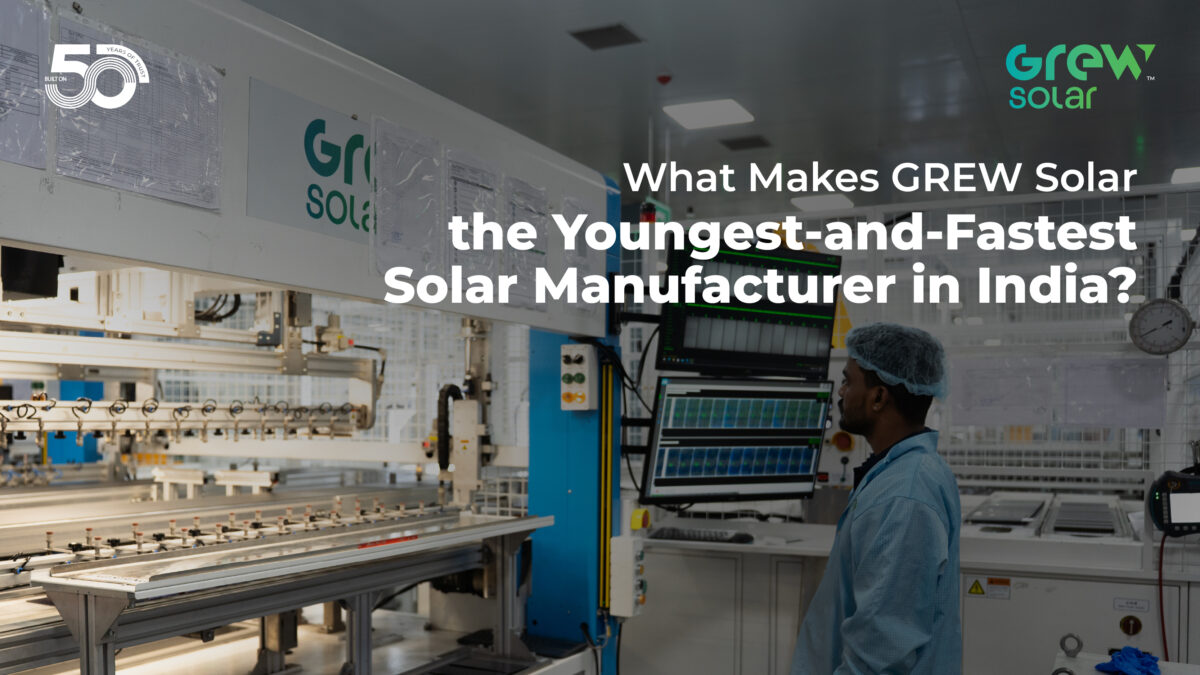
What Makes GREW Solar the Youngest-and-Fastest Solar Manufacturer in India?

India’s solar sector is expanding at an unprecedented pace, and solar panel manufacturers are being evaluated more critically than ever before. Capacity and delivery timelines still matter, but they no longer define credibility on their own. Today, factors such as scale, technology, and long-term reliability influence decisions just as much as solar panel price. In this evolving landscape, the best solar panel companies are those that combine growth with consistency.


Scaling with Speed and Structure


GREW Solar stands out as one of the youngest and fastest-growing solar panel manufacturers in India. Its growth has been driven not just by demand, but by a deliberate focus on manufacturing expansion. With a roadmap targeting 11.0 GW of solar PV module manufacturing and 8.0 GW of solar PV cell manufacturing in 2026, the company is strengthening domestic capacity at a time when supply chain stability matters more than ever.


As solar panel manufacturers compete to meet rising demand, scale increasingly plays a role in influencing long-term solar panel prices. The best solar panel companies understand that investing ahead of demand ensures reliability in both delivery and pricing. Growth without structure can create volatility, but disciplined expansion supports stability across the value chain.


Technology, Certification and Performance


Beyond expansion, GREW Solar has focused heavily on technology and compliance. Its M10R and G12R modules, now ALMM certified, reinforce its position among credible solar panel manufacturers operating in India’s regulated market. ALMM certification signals adherence to quality standards and eligibility for government-backed projects.


For customers evaluating solar panel price in large-scale deployments, such certifications offer assurance of consistency and compliance. Among the new solar panel manufacturers, this focus on performance and regulatory alignment creates a stronger foundation for long-term growth. Manufacturing depth, testing discipline, and integrated systems also contribute to stable solar panel prices over time.


Recognition and Market Position


Technology and manufacturing depth are only part of the equation. Recognition from the industry further strengthens credibility. GREW Solar was recently awarded Solar Module Company of the Year at the 24th Global Edition & 9th India Edition of the Business Leader of the Year Awards. This recognition places the company firmly among the best solar panel companies gaining attention at a national level.


As more solar panel manufacturers enter the market, independent validation helps differentiate those building sustainable scale from those chasing short-term growth. What sets GREW Solar apart is not just how fast it has grown, but how responsibly it has scaled. Stable operations, quality testing infrastructure, and integrated production systems influence not only performance but also long-term solar panel prices.


Being one of the youngest solar manufacturers in the country has allowed GREW Solar to build with modern systems from the ground up. Instead of retrofitting legacy processes, it has scaled with technology and backward integration in mind, maintaining competitiveness while strengthening operational control.


As India moves toward higher renewable energy targets, the role of reliable solar manufacturers becomes even more critical. Scale, certification, recognition, and disciplined execution must move together. In this environment, GREW Solar’s rapid expansion and industry recognition reflect why it is increasingly counted among the best solar panel companies shaping India’s solar future.

Categories
Uncategorized

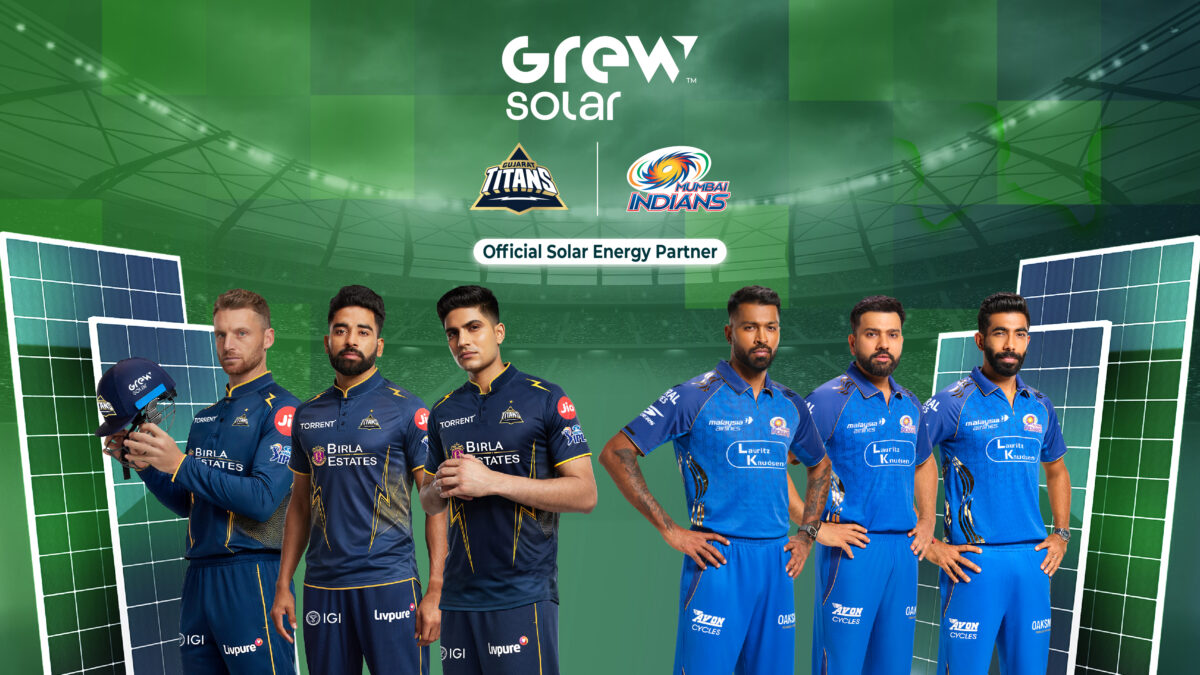
GREW Solar Partners with Mumbai Indians and Gujarat Titans as Official Solar Energy Partner for the Men’s T20 Cricket League

Building on its Women’s T20 association, GREW Solar extends its cricket footprint to world’s most iconic men’s T20 franchise

Ahmedabad / Delhi / Mumbai, 19 March 2026: GREW Solar, one of India’s youngest and fastest-growing solar manufacturers backed by the Ahmedabad-based Chiripal Group, today announced its partnership with Mumbai Indians and Gujarat Titans as Official Solar Energy Partner for the upcoming Men’s T20 cricket season.

The multi-team association follows GREW Solar’s successful Women’s T20 partnership alongside current champions Royal Challengers Bengaluru and marks a significant scale-up in the company’s strategy to mainstream clean energy adoption through cricket’s unparalleled global reach.

As Lead headgear partners, GREW Solar’s logo will feature prominently on Gujarat Titans’ helmets and caps, on-ground presence with stadium LED boards, big-screen integrations, along with broadcast visibility across TV and digital platforms. Through Mumbai Indians, the brand gains nationwide exposure via one of cricket’s most globally recognised fanbases, enabling GREW Solar to connect with urban and semi-urban audiences across India and beyond. The association will be amplified through integrated marketing campaigns spanning digital storytelling, influencer collaborations, regional activations and fan engagement across both partnerships will include online contests offering match tickets, merchandise, and more.

Vinay Thadani, CEO and Director, GREW Solar said, “Gujarat is India’s solar capital, and partnering with the Gujarat Titans is a seamless synergy; a state that leads in solar and a team that embodies that same pioneering spirit. Adding Mumbai Indians makes this a national play, connecting us with India’s most ambitious, forward-thinking audiences. Cricket reaches every Indian and increasingly, so should solar energy. This is a strategic decision that puts GREW Solar’s message of clean, affordable energy exactly where it belongs: one of the world’s biggest stages. We are powering the next.”

The partnership with Gujarat Titans carries a resonance for the brand that goes beyond cricket. GREW Solar shares its home city with Gujarat Titans’ home ground at the Narendra Modi Stadium in Ahmedabad – the heart of one of India’s most advanced renewable energy markets. The connect deepens further: both GREW Solar and Gujarat Titans were founded in 2022, making them two of India’s youngest and fastest-rising names in their respective fields. Gujarat Titans won the title in their debut season; GREW Solar has scaled with similar conviction, rapidly establishing itself among India’s leading PV manufacturers. Same city, same year, same hunger to redefine their game.

Colonel Arvinder Singh, COO, Gujarat Titans, “We are pleased to partner with GREW Solar, a brand that shares our spirit of innovation and rapid growth. Both Gujarat Titans and GREW Solar have emerged strongly since 2022, and this partnership reflects a shared ambition to lead and inspire. We look forward to building a meaningful association that connects with fans while championing the importance of sustainable progress.”

A Mumbai Indians spokesperson said, “GREW Solar’s vision to make clean energy more accessible resonates with our belief in progress and excellence. We’re excited to build this association together.”

As the season unfolds, GREW Solar’s dual partnership creates a powerful platform to carry the message of clean, accessible energy to millions – accelerating India’s transition to a sustainable future.

Categories
Uncategorized

GREW Energy Private Limited and Shanti Educational Initiatives Limited

Monday, 02nd March 2026

GREW ENERGY AND SHANTI EDUCATION BOARD APPROVES PROPOSED MERGER OF SHANTI EDUCATIONAL INITIATIVES LIMITED WITH THE COMPANY, APPROVES SHARE EXCHANGE RATIO AND SCHEME OF ARRANGEMENT

The Board of Directors of GREW Energy Private Limited and Shanti Educational Initiatives Limited at its meeting today, approved the proposed Scheme of Arrangement between Shanti Educational Initiatives Limited (SEIL) and Shanti Learning Initiatives Private Limited (SLIPL) and GREW Energy Private Limited (GEPL) and their respective shareholders and creditors.

The Scheme inter alia provides for the following:

● as a first step, slump sale of the business undertaking from SEIL to SLIPL in consideration of issuance of shares by SLIPL to SEIL, determined by an independent valuation

● as a second step, amalgamation of SEIL with the Company in consideration of issuance of shares by GEPL to shareholders of SEIL determined by an independent share exchange valuation

GEPL, a venture of the Chiripal Group, is one of India’s fast-growing solar PV manufacturers. The company operates a 6.5 GW PV module manufacturing plant in Dudu, Rajasthan, with plans to scale to 11.0 GW, and is setting up an 8.0 GW solar PV cell & Ingot-Wafer facility in Narmadapuram, Madhya Pradesh. GREW manufactures high-efficiency N-type TOPCon solar modules on G12R and M10R technologies, designed for reliable performance across utility, commercial, industrial, and rooftop projects. With a strong focus on quality standards, sustainable manufacturing, GREW Solar is contributing to India’s clean energy growth.

SEIL specialize in offering strategic solutions that cater to a diverse range of educational institutions, spanning from preschool levels through post-graduation. Additionally, company extend its expertise to include the establishment and management of schools, addressing the unique needs of aspiring individuals.

The Board also approved the share exchange ratio for the proposed merger. The ratio was approved based on the comprehensive valuation exercise carried out and recommended by two independent registered valuers, M/s Finvox Analytics and A N Gawade. As per the valuation, the shareholders of SEIL will get 100 fully paid equity shares of face value of Rs 1 per share in GEPL for every 212 fully paid equity shares of face value of Rs 1 each held by them in SEIL.

Ernst and Young (EY) & P. Murali Consultants Private Limited acted as the transaction advisors to the proposed transaction.

Speaking on the development, Vinay Thadani, CEO & Director, GREW Energy Private Limited, said, “This proposed merger marks a significant milestone in our broader group restructuring initiative. It is a strategic step towards reorganizing, consolidating and streamlining the corporate structure, resulting in greater operational efficiency and implementing smoother and more effective controls and processes. As we continue to scale our integrated solar manufacturing capacities and advance our plans to expand into global markets, this merger strengthens our foundation and positions us to deliver sustainable, long-term growth. The proposed merger is not merely a structural consolidation, but a strategic realignment designed to accelerate value creation. The listing of the company will provide enhanced transparency, institutional credibility, and a robust foundation for sustainable expansion.”

“The proposed merger brings together the strengths of both entities and creates a stronger and more efficient structure. We are confident that this will enhance shareholder value and provide SEIL shareholders the benefit of participating in GREW Energy’s growth journey as it scales its business.” Mr. Vishal Chiripal, Managing Director, Shanti Educational Initiatives Limited (SEIL).

The proposed Scheme is subject to requisite approval from shareholders and creditors, Stakeholders, Stock Exchange, jurisdictional National Company Law Tribunal (NCLT) and other applicable regulatory authorities. Upon receipt of all regulatory approvals and necessary compliances, GREW Energy will get listed on the recognised stock exchange.

Categories
Uncategorized

GREW Solar at The smarter E India: Powering India’s Innovation for the New Energy World

Every year, The smarter E India stands as one of the country’s most influential clean energy platforms. Bringing together Intersolar India, ees India, and Power2Drive India under one umbrella, it operates as an integrated innovation ecosystem for the new-energy sector. With three parallel exhibitions, it reflects the convergence of solar, storage, and electric mobility while addressing critical themes across the entire value chain.


Hosting 13,832 visitors, 235 exhibitors, and more than 567 speakers and delegates, The smarter E India stands as a high-impact business and policy platform where clean energy technology translates into real-world execution.


From policymakers and manufacturers to developers, utilities, and technology leaders, The smarter E India is where strategy translates into implementation. Conversations around domestic capacity expansion, ALMM alignment, grid readiness, and storage integration demonstrate how India is structuring its next wave of renewable growth.


As the exhibition returns to Gandhinagar, Gujarat, GREW Solar looks forward to contributing meaningfully to these discussions.

GREW Solar at The smarter E India 2026

Our participation this year is anchored in a single theme: Innovation that Performs at Scale.

In today’s environment, innovation is not limited to product architecture. It extends to process stability, certification depth, quality systems, and manufacturing frameworks that can withstand volume pressure.

India is adding 30–35 GW of solar capacity annually. At this pace, systems matter as much as scale. Growth without operational control is unsustainable.

Backed by the Chiripal Group’s 53+ years of manufacturing legacy and global trade relationships across 50+ countries, GREW Solar continues to deepen India’s domestic manufacturing capability with the state-of-the-art manufacturing facilities in Rajasthan and Madhya Pradesh. As one of the select companies awarded 2.0 GW PLI capacity across PV Modules, PV Cells, and Wafers/Ingot manufacturing, we are building structural strength aligned with India’s renewable roadmap, reinforcing our position as India’s youngest and fastest-growing solar PV module manufacturer.

What We Look Forward To


The smarter E India provides a meaningful platform to engage with stakeholders who are actively shaping the next phase of India’s solar manufacturing and deployment landscape.

This year, we are looking forward to:

  • Engaging with global industry leaders, policymakers, independent power providers, renewable enthusiasts, farmer groups & cooperatives and innovators shaping the next phase of clean energy transformation.
  • Understanding evolving global demand signals and their impact on domestic manufacturing strategy.
  • Showcasing our comprehensive product portfolio, including the G2G N-Type TOPCon Series, the G12R High-Power Series, and the Premium All-Black Series, each engineered to address requirements across utility-scale, commercial, and retail segments.

India’s Solar Market: Booming and Growing with Innovation


India’s solar market is transitioning from rapid expansion to execution-led maturity. According to BloombergNEF (BNEF), India is projected to become the world’s second-largest solar market in 2026, supported by sustained domestic additions even as global installations moderate.

In the first eleven months of the previous year alone, India added 34.98 GW (AC) of solar capacity. BNEF estimates that additions could exceed 50 GW in 2026, largely driven by utility-scale projects, with rooftop segments supported by policy momentum. This positions India strongly toward its 2030 target of 500 GW (AC) non-fossil capacity.

For GREW Solar, this trajectory reinforces responsibility. Manufacturing must not only expand it must also support dependable deployment. The emphasis is on ensuring that scale enhances reliability rather than stretching systems.

True to our identity as India Ka Apna Solar, we take pride in contributing to this transition through domestic design and manufacturing.

GREW Solar’s Manufacturing & Product Ecosystem


Founded in 2022, GREW Solar has rapidly built a structured backward integration roadmap, strengthening its footprint across PV modules while preparing for expansion into PV cell manufacturing. Our growth is guided by execution discipline, technology adoption, and scalable manufacturing systems designed for long-term performance.

Our manufacturing infrastructure is supported by advanced in-house quality systems and a state-of-the-art R&D and Reliability Lab equipped to perform 25 types of IEC-standard validation tests. These include Environmental Chamber testing (Damp Heat, Thermal Cycling, Humidity Freeze), UV testing, Mechanical Load testing, Hail Impact testing, PID testing, Hi-Pot & IR testing, and multi-stage EL testing. AI-enabled visual inspection and stringent process controls further ensure that every module meets defined performance and durability benchmarks before dispatch.

G12R Solar PV Module (132 Half-Cut Cells)

Recently included under the MNRE’s ALMM framework, our high-efficiency G12R Solar PV Module represents the next phase of performance-driven engineering.


Designed for utility-scale projects that demand higher power density, the G12R delivers up to 635 Wp with efficiency of 23.51%. By reducing the total module count by approximately 6–8% per MW, a typical 100 MW installation may require around 160,000 G12R modules, compared with 172,414 conventional modules, resulting in optimised BOS costs and faster installation timelines. The design supports scale without adding operational complexity.


M10 Solar PV Module (144 Half-Cut Cells)

Our M10 Solar PV Module, listed under the Ministry of New and Renewable Energy’s (MNRE) Approved List of Models and Manufacturers (ALMM), is engineered for consistent output across diverse deployment environments.

With peak power ratings up to 590 Wp and module efficiency up to 22.84%, the M10 module balances high efficiency with deployment flexibility for utility-scale and commercial applications. Backed by a 30-year linear performance warranty, it guarantees 87.40% output at year 30, reinforcing long-term generation reliability and asset confidence.

Premium All-Black Series (108 Half-Cut Cells)

Built under our “Made in India, for America” approach, the Premium All-Black Series integrates performance with architectural aesthetics.

Delivering up to 440 Wp in a refined all-black design, this series complements modern residential and commercial structures while maintaining high energy yield. Enhanced shade tolerance, durability-focused construction, and long-term reliability make it suitable for performance-conscious rooftop applications that demand both efficiency and visual harmony.

Powering the Next Phase of India’s Solar Growth


As we prepare for The smarter E India 2026, we remain focused on building manufacturing systems that support sustainable, disciplined scale. Manufacturing maturity is no longer optional; it defines the credibility of India’s clean energy future.

We continue to strengthen our module capabilities, expand into PV cell manufacturing, and deepen process control frameworks that prioritise reliability, compliance, and long-term performance. Every step we take reinforces our commitment to delivering solutions that match India’s accelerating solar ambitions with execution certainty.

We look forward to meaningful conversations in Gandhinagar with stakeholders shaping the next phase of India’s renewable energy journey.

Visit us at Booth O101, Hall 10 at The smarter E India 2026.

Book an appointment at info@grewsolar.com

Categories
Uncategorized

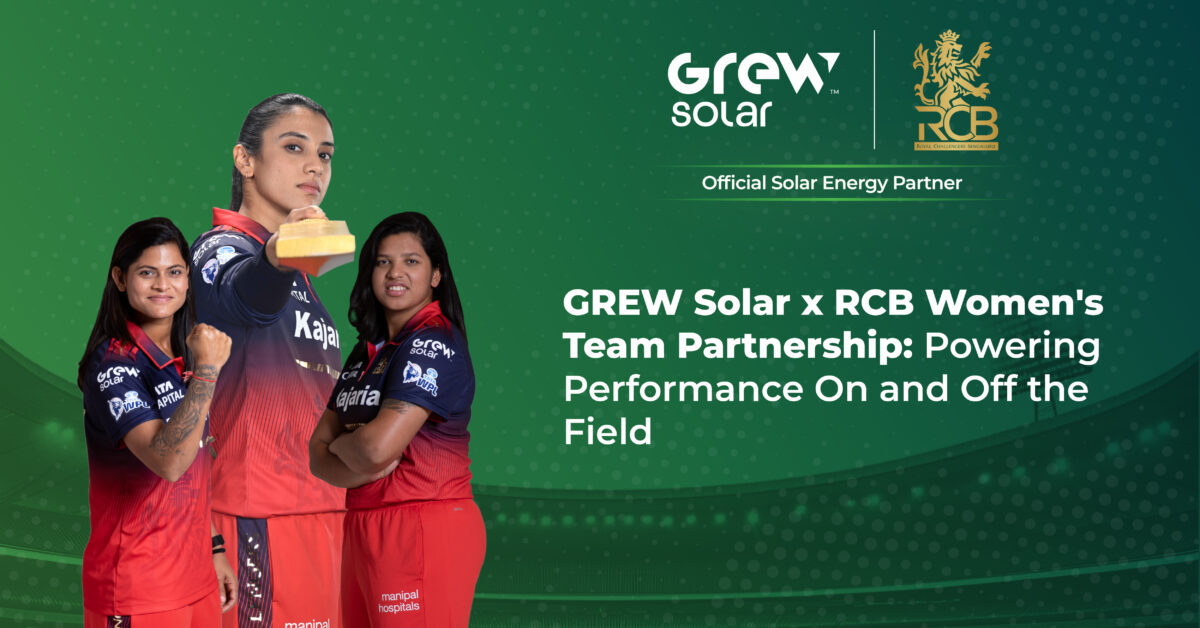
GREW Solar x RCB Women’s Team Partnership: Powering Performance On and Off the Field


Performance is easy to applaud and hard to sustain. Whether on a cricket field or inside a solar manufacturing line, consistency is what separates promise from leadership. GREW Solar’s partnership with the Royal Challengers Bengaluru Women reflects this shared understanding of what it takes to perform on the field and beyond.


For GREW Solar, this partnership also marks an important moment in the brand’s journey. It comes alongside the company’s first national television commercial and signals a new phase of engagement with a wider audience. Two Forces. One Mindset.


What This Partnership Means for GREW Solar


India’s clean energy sector is growing fast, and that has changed how solar panel manufacturers are evaluated. Capacity and delivery continue to matter, but they don’t carry the same weight on their own. Factors like consistency, reliability, and how a company thinks about the long term are now just as important.


For GREW Solar, the lead arm partnership with the Royal Challengers Bengaluru Women represents a shift in how the brand engages beyond the industry. It reflects a stage where manufacturing capability is supported by a clearer, more visible brand presence, one that communicates performance and intent to a wider audience.


As one of India’s growing solar module manufacturers, GREW Solar operates in an environment where performance must be repeatable and measurable. Manufacturing excellence is built into the design, production, and testing of solar PV modules, where systems are expected to deliver consistently over time.


The RCB Women players featured in the GREW Solar film bring these ideas to life. Their preparation, resilience, and discipline reflect the same principles that guide how GREW Solar scales responsibly, delivers reliably, and builds systems designed for the long term. The first TVC and the partnership together reflect a shared approach to performance and growth.


Why Cricket Was the Right Platform


Cricket is an easy way to explain performance, especially at the professional level where success depends on preparation, teamwork, and showing up consistently rather than occasional good days. These realities closely mirror what it takes to operate a manufacturing organisation at scale.


Discipline and consistency are essential in solar PV module production, where manufacturing systems are expected to deliver consistent quality day after day. Cricket, in this sense, became a natural platform to reflect values that already exist within the organisation.


The RCB Women’s Team T20 Partnership


The RCB Women’s Team represents modern, performance-led leadership in a competitive environment. Women’s professional T20 cricket today highlights preparation built through effort, resilience developed through experience, and leadership demonstrated through results.


Speaking about the partnership, Vinay Thadani, Director and CEO of GREW Solar, has pointed to the rapid rise of women’s cricket and the RCB Women’s Team’s focus on performance, consistency, and ambition, noting that the lead arm partnership supports deeper engagement with fans while reflecting the same emphasis on preparation and performance under pressure that guides GREW Solar’s manufacturing approach.


The evening was a meaningful exchange between elite athletes and GREW Solar, a manufacturing organisation grounded in performance, consistency, and long-term thinking. This mindset is reflected in its approach to process control, quality validation, and long-term reliability in solar PV module production. These shared principles connect high-performance sport with manufacturing excellence and sustainable scale, supporting India’s broader net-zero ambitions.


GREW Solar’s Role in India’s Net Zero Journey


India’s progress toward Net Zero requires steady effort from every industry, especially solar manufacturing. Manufacturers like GREW Solar have an important role here, they need to build capacity and make sure the systems and products are built to last.


GREW Solar is working to make clean energy more visible, trusted, and understood. As one of India’s top solar companies, it is building energy infrastructure and raising public awareness, supporting India’s ongoing efforts to reach net zero goals.


Powering the Next Generation of Sport; Sustainably


Sustainability becomes more meaningful when performance drives measurable impact. In the ongoing WPL season, RCB’s disciplined bowling spells have resulted in 74 dot balls, translating into 3,700 trees planted through the tournament’s green initiative. This directly strengthens GREW Solar’s Pledge-A-Tree campaign, where on-field excellence fuels real environmental action. The campaign is built on a simple but powerful idea: every moment of sporting precision can contribute to restoring ecological balance. By linking cricketing performance with reforestation, GREW Solar reinforces its commitment to clean energy, climate responsibility, and creating long-term value beyond the boundary ropes.


Powering Performance with Purpose


While the partnership highlights leadership in sport, it’s relevant in solar manufacturing where environments are defined by adaptability, accountability, and the ability to build systems that endure. These shared characteristics are important for managing complex operations, technologies, and rising performance expectations.


The partnership between GREW Solar and the RCB Women’s Team represents more than a branding initiative. It recognises leadership in diverse forms and how performance is the result of preparation, collaboration, and long-term commitment.


For GREW Solar, this moment reflects an intent to engage more openly with the public while remaining anchored in manufacturing excellence. Whether in sport or solar manufacturing, performance only matters when it is built to last.